Why VCs Buy in Europe and Sell in the US
Daniel Keiper-Knorr Founding Partner, Speedinvest
Daniel Keiper-Knorr is a Founding Partner at Speedinvest, where he leads fundraising and LP relations. A conversation, held in German and translated here, about venture capital in Europe and the US, and why exits so often cross the Atlantic.
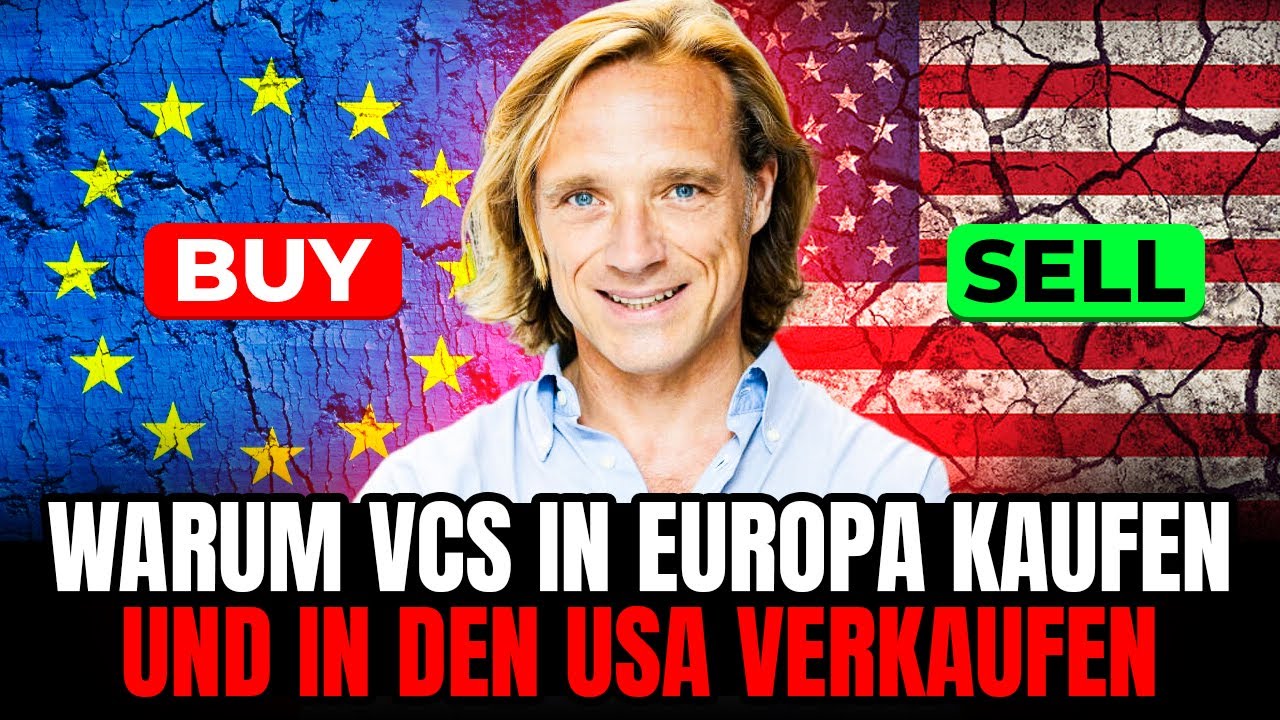
- Keiper-Knorr argues that Europe invests only about an eighth of US venture capital per head, even though the European economy is bigger and produces more technology graduates who are, on average, at least as well trained. The gap is a capital problem, not a talent problem.
- The arbitrage is real: buy early and cheap in Europe, sell at the late stage in the US. According to Keiper-Knorr, what Europe lacks above all is growth capital for the late rounds up to IPO readiness, which is why the best companies move away.
- On the pension system, Keiper-Knorr runs the numbers: 10,000 euros for every newborn in Austria, invested broadly until retirement age, comes out at around one million euros adjusted for inflation. “Pension problem solved.” Still, don’t count on the state: start providing for yourself early and comparatively small amounts are enough.
- Early-stage VC means long feedback loops: 6 to 8 out of 10 investments deliver no relevant contribution to the result, and you only know whether a fund is really good after a decade. Speedinvest is in its fourth fund generation after 13 years (as of recording: May 2024).
- According to Keiper-Knorr, equity has historically always been the real growth driver, never credit. Government funding programs can complement that, but not replace it; the inner drive has to be the entrepreneurial profit motive.
Intro
Watch this part · 0:00Kevin Hi everyone, today on Wavect we have Daniel Keiper-Knorr, the Managing Partner of Speedinvest. We'll mainly be talking about the different funding landscapes in the US and Europe, with a bit on Africa and Asia too, why they differ somewhat, or not just somewhat, as you'll hear later on, and what that might ultimately mean for us as a society, and why things are the way they are. So a really exciting, deep podcast. I enjoyed it a lot and I'm convinced you will too.
Kevin Hi Daniel, thanks again for taking the time to talk to me today. I'd say we jump straight into the first question.
How do the European and US venture markets compare?
Watch this part · 0:50Kevin A few weeks ago I saw a pretty interesting post about EU versus US startups, deal flow and so on. The idea being that in the EU you can buy up startups fairly cheaply, and then there's this arbitrage opportunity in the US, where you sell them on again. And you commented underneath and signed it off with, if I can put it that way, a smiley, saying that this is actually true, that there really is a bit of a trend there. So I'd love to hear your general take on it. How do you see the two markets, how do they interact, and how do you maybe use that yourselves?
Daniel Happy to, happy to, Kevin. Thanks for the invitation, and hello from my side as well. What you're touching on really is something that occupies quite a few people in the European venture industry, and that includes us here at Speedinvest: quite simply the fact that there is too little capital in Europe. For all these investment opportunities, and for solving the big challenges in front of us. Just think of the really big topics, climate change, demographics, deglobalization, and on and on. Technology, innovation and entrepreneurship will be able to contribute a great deal to solving these challenges, which the whole world faces, and Europe with it. And solving them takes many things, but it also takes capital.
Daniel And Europe genuinely has too little of it. There may be all sorts of reasons for that. You can break it down from the very big picture to the very small. If you directly compare the two big Western hemispheres, if you can call them that, the US and Europe, or North America and Europe: the two economies are similar in size. Europe is actually bigger. Europe has half a billion people. The US is somewhere at 350 million plus, add 80 million Canadians and a few Mexicans. So roughly the same size, with an average GDP per head in a similar weight class. But the capital markets are structured in diametrically opposite ways.
Daniel Now take the small slice of that that is venture capital: in the US, about eight to ten times as much per head gets invested in this space as in Europe. It's a market with a lot of peculiarities. It's shaped by high failure rates, especially at the early stage, which is where Speedinvest operates. Very, very high failure rates. Which means you have to make a lot of investments and diversify the portfolio broadly to have a chance of catching one of the few really big startups early enough to benefit from the truly enormous value creation potential sitting in there. And for that you need capital.
Daniel Now, Europe is structurally more risk-averse than the US. That goes all the way down to very, very fundamental cultural differences. We won't completely undo or close those in the next 10, 20, 30 years. But at some point we in Europe have to start investing with a bit more confidence in the future again, instead of always just buying real estate, which produces exactly nothing, creates hardly any jobs, let alone contributes anything to the innovation of the economy and society. Or, even worse, putting it in a savings account. Sounds so nice, a savings account, but de facto it's nothing other than lending your money to the bank instead of investing it in a company. And those are epochal changes you have to push for.
Daniel All we can do is try to contribute our small part and point to the opportunities Europe offers. We have more technology graduates than the US. On average they're also better trained than the ones in the US. As a rule they're also cheaper to hire in the early stages than in the US. So our economy is bigger, the talent pool is bigger, and on average it's at least as good. But we invest only an eighth. And you have to ask yourself: why? Now, you can of course invest at the beginning. But the actual gap, if you will, to the US opens up in the later stages. It's really in growth capital, where individual companies do funding rounds of a few hundred million, not euros but dollars, to then go public at some point and, with a successful IPO, reward the risk that the entrepreneurs and the early-stage investors took on.
Daniel And now this thesis is making the rounds in the market: wouldn't the smartest move be to invest early in Europe, so you benefit from that price and volume advantage in Europe, and then sell the company on in the US at the late stage, once it's developed. Which is of course what you mentioned at the start with this arbitrage opportunity. It really does exist, yes, it really does. The big seven technology firms alone, the ones dominating the American stock market, buy smaller and small startups on a weekly basis, including European ones. That's news that rarely, if ever, reaches the media at all. There have actually been some very, very spectacular success cases out of Austria as well. Really lovely success stories, but there are simply so few of them. Out of the big pool of companies that get started every year, only very few make it to the top.
Daniel And it would be nice to see late-stage risk capital come from Europe too and help make sure these companies don't move off to the US. Ultimately you can't blame the entrepreneur either. He goes wherever he finds the best conditions for his company, and that is what he's responsible for, nothing else. And if that's in the US, then nobody who doesn't invest here themselves gets to moan about companies moving to the US. That's obviously no contribution to a solution. You simply have to keep carrying this idea out there and make the broader public aware that there are very, very good opportunities and openings here in Europe that would absolutely deserve to be taken all the way to IPO readiness with European capital.
How far is Europe behind the US?
Watch this part · 10:35Kevin That sounds a bit like a chicken-and-egg problem, right? It's basically like building a platform, you need both sides. On the one hand you need the venture capital, where, as you said, only an eighth of the volume actually arrives here in Europe, let's say. And on the other hand you obviously also need the same quality of innovation within Europe. And that's where I ask myself: is that already the case, or are we still far away there, in your view?
Daniel We are far away. Measuring it exactly is difficult to impossible. But it's commonly understood that we're still very, very far away from the US. If you try to measure it on a timeline, we're certainly 50 years behind. There may be many reasons for that. It certainly has something to do with how the past century played out in Europe. Great realms and empires collapsed. Two world wars took place. All of that happened in Europe. In America that never happened. The last war they had was the civil war. 1870, when was that? End of the 19th century. And before that the war of secession, end of the 18th century. But since then, no war on American soil. That obviously helps. We're certainly very far away. But waiting won't make the gap any smaller. At some point you have to start taking the opportunities and your own development into your own hands.
Daniel You mentioned the chicken-and-egg problem. That's certainly true, no question. But actually, every market has that. The chicken-and-egg problem is one of the defining features of a market. Every market has a chicken-and-egg problem. Either demand comes first or supply comes first. And the two sides, when it really works, make the other side grow over time. And the offerings out there keep getting bigger. Supply attracts more demand, more demand attracts more supply, and so on. This chicken-and-egg problem, or the cold start problem, as it's also called, comes with every marketplace. And there are solutions for it. At some point, for every market, the final boss of demand is private consumption. Because you and I and everyone here listening and watching, we live. Living means consuming. Maybe that's getting a bit philosophical now, but that's genuinely how it is.
Daniel And whoever lives has to eat, and from there it goes up Maslow's hierarchy of needs, fraying out further and further at the edges. But at the very end it's private consumption that drives everything. And growth means consumption. You have to know that too. Without growth no consumption, and the other way round. Everything will ultimately come down to that, even in the seemingly remote B2B marketplaces, or all the way to a capital market. Because we're all getting older, and society has an old-age poverty problem. And you could tackle that if you started early enough to set capital aside and invest it. And not rely on the ever smaller number of employees in the country who, with ever shorter working lives, have to provide for an ever bigger pool of people entitled to benefits.
Daniel You can run the numbers on that. Recently the political debate floated the idea that every 18-year-old should be gifted 25,000 euros or so. You do have to ask: why only every 18-year-old, and why 25,000 of all numbers? If you gave every newborn in Austria, and roughly 80,000 people are born in our country each year, 10,000 euros, that would cost 800 million a year. That's a fraction of what we pay in tax money into the pension system. If those 10,000 euros are invested over the years until the regular statutory retirement age, they turn into 1 million euros, adjusted for inflation, even if you only invest broadly in the S&P 500. Pension problem solved. And the demand is there. The people, society, have to be provided for. So it's absolutely necessary to think about how to manage that with different solutions than the ones we've had. Not as a complete replacement for now, but at least start with it as an additional solution.
How do the markets differ: the US, Asia, Africa?
Watch this part · 15:58Kevin Those are a few very, very interesting points. I'd like to come back to the international angle, especially when you're investing as a VC, and get into the differences between the markets a bit. Europe we've already covered somewhat, that reluctance, the risk side, and innovation itself. The US is obviously, as you said, a bit better off there, very far ahead. My thesis as a non-VC, as a layman, is this: the US runs on credit to a huge degree. They have an enormous mountain of debt. So it doesn't come from actual economic growth. Whereas in certain countries in Asia it does, or in Africa or wherever, purely in percentage terms. How do you see that? Or did I just talk nonsense?
Daniel I don't think what you said was nonsense. It's true, of course. In the US, the public deficit in particular is very, very large. But you also have to say the US takes on a lot of tasks that we've fairly nonchalantly outsourced to them over the past many decades. Defense, to name one. Sure, they do other things differently from us. At least until recently that was the case on global warming and environmental protection. But when the US does do something, they do it in a big way. Like this Inflation Reduction Act now, which is primarily there for homeshoring and a green transformation of industry. And it gives the whole economy an enormous push. And that's simply missing in Europe.
Daniel As for Asia, I have to admit I lack the insight there, because China is one big black box. Nobody knows what exactly is going on there. The other countries matter too, but the developed ones are [unclear], because Japan, Korea, not that big yet. The others are still too far back on the development curve. You mentioned Africa as well, of course. Africa is, in itself, a huge, huge opportunity too. A gigantic continent, enormously rich in raw materials, including raw materials that are only now becoming really important. Also in the course of this whole move out of fossil fuels and into, and I'm deliberately not saying electric, other forms of propulsion. The opportunities there are certainly enormous, but in terms of development they're probably still somewhat behind economically.
Daniel On the other hand: Africa has almost one and a half billion people, and the average age is somewhere under 30. With population pyramids like that, to close this back to the pension system discussion, the pension system we have works. But our population pyramid stopped being a pyramid a long time ago. With every passing year it becomes more of a vase flaring out at the top, narrowing further and further at the bottom. The people who pay into the pension system under the current setup, and the people at the top drawing support from it: more come along every year, the ones who are in it live longer, and they work shorter.
Kevin Do you mean mainly because of the school system, or?
Daniel Yes, the school system, or university and so on. Well, life expectancy is now growing, I believe, by something like a year every year, or a year every decade. The retirement age, 65 and 60, both recently aligned at 65 I believe, dates from a time when people didn't live to 82 but to 72. So on average ten years get added now, but hardly anyone actually retires at the statutory age, the average retirement age is well below that. Which means they leave earlier and stay in longer. Not only because they leave earlier, but also because at the other end, and honestly, I wish that for every single person, they live longer. But the time an average Austrian spends in retirement is soon 30 years. So, when do you start working? The earliest at some point at 16, the latest at maybe 30, and then they leave at 55. One person works 25 years and the other 40, and both spend 30 years each in retirement. That math can't work.
Will there still be a pension system?
Watch this part · 21:41Kevin At least when I look around my own circle, pretty much everyone knows this. Personally, for example, I no longer believe the pension system in its current form, or that there'll be anything at all, will catch me in old age.
Daniel The problem is: every single person in our generation has to start providing for themselves now. There's no way around it. And if you start early enough, it works even with comparatively small amounts. Yes, as so often, a lot of things play... And the whole field of risk capital, venture capital, startup financing, the pre-IPO capital market and corporate financing plays a really essential role. We see it at Speedinvest too: a good part of the capital we have available to invest in startups actually comes from insurance companies and pension funds. But only very recently. It took us ten years to earn the position and the reputation in the market to even be considered as a partner by those investors.
Daniel So thank goodness things are moving, but in direct comparison, and now again, to close the loop back to the start of our conversation: the difference between Europe and the US on this topic is still enormous. It also varies within Europe. The Austrian and German pension systems, for example, are set up differently from the Scandinavian ones, or the Netherlands, or England. There are measurable regional differences. So in that sense: lumping all of Europe together can never do justice to a continent of 500 million people. But to point out a few issues, you have to allow yourself a certain simplification now and then.
Kevin Right, that's how you learn, after all.
Do world powers follow a life cycle?
Watch this part · 24:35Kevin Now, I don't know if you're familiar with this curve, but I'll just throw it out there. Ray Dalio wrote a book and put out a video about How to Deal with the Changing World Order. Not sure if you know it.
Daniel I'll say no. I can very well imagine he's commented on it, because he comments on a great many things, a great many important things. But please, what does he say with that curve?
Kevin I can only reproduce this as a layman, of course. And it's been a year since I watched it. Anyway, very simplified, there's this curve, a life cycle of a world power. At the beginning labor is cheap, then innovation comes in, education, all those things, and the empire rises. Everything goes up, everything's great. The currency gets stronger and stronger. It all fits. Everything that moves the nation upwards. A lot gets exported, naturally, because labor is cheap and so on. But at some point the moment comes when people realize: okay, I don't have to work at these prices anymore. You can sort of feel that with China and so on, when you look at Asia. Also this branding shift from Made in China to Made by China and so forth. That it's now supposed to move towards quality, that wages go up. I also know a few Indians by now who are incredibly competent and earn pretty well, especially for over there.
Kevin And in the end that's a kind of cycle. And right at the top there's eventually this tipping point where the next nation comes along, and labor is cheaper again and so on and so forth, and education. And it runs its usual course. And I just think, that's obviously a very, very, very big picture. We're really talking 50 to 100 year cycles or longer. And so many factors play into it. But the US and Europe, by feel, and now just on this VC landscape, let me put it that way: is that something you have on your radar, where you say, as a continent, as countries themselves, you always want to swim with the market and not against it? And the market as a whole is maybe a bit like swimming against one. Is that something you factor in? Or do you say, this is our market?
Daniel Good question. Not at all easy to answer. Dalio is certainly right in what he says. This phenomenon of the rise and fall of nations, empires, large companies too. I think it's understood that this phenomenon exists. You can maybe abstract it a bit, to organizations in general. Whether it's a country, a nation, an empire or a large company is almost secondary. I think it's a phenomenon that simply describes the life curve of organizations. What it really comes down to then is gently reinventing yourself at regular intervals up there in the mature phase.
Daniel Whether you want to map that onto the competition between the US and Europe in the venture capital market? You can first ask: does that competition even exist as such? Probably yes. Although there's no competition here that's been declared under any set of rules. It's about the two essential stakeholder groups a venture fund is accountable to: on one side its backers, and on the other side the people, or the companies, that give it its stake. That's this inner triangle. It's about those two stakeholder groups. And a fund has to keep serving both of them as well as it possibly can to justify its own existence.
Daniel And in venture capital, especially early-stage venture capital, here's the thing: the response cycles are enormously long. If we invest in a startup in year X, we only know in year X plus 8 or X plus 10 whether it turns into a success or not. And if so, how big. You tend to find out fairly quickly that something won't be a success, sooner than you find out that it will be. And you have to reckon with very high failure rates anyway: 6 to 8 out of 10 deliver no contribution to the result, or only a subcritical one. And 2 out of 10 deliver something material, and one out of 10, or maybe the percentage is even lower, a really big result, the kind that makes the venture fund as such work and ensures it makes it into the next generation.
Daniel That's how it is with us too. We've been doing this for 13 years now. We're now in our fourth fund generation. So roughly every third or fourth year we have a new venture fund in the market. And that's about cycles as well. The money raised from investors in the first fund was invested into the portfolio, was returned to the investors through successful portfolio sales, and they then invest in the next fund, where the wheel starts turning all over again. And the money that comes out goes into the fund after next, goes round once, and naturally keeps getting bigger. You have to grow with the market a bit there too. But until we know whether we're really good at what we do, a decade goes by. And you simply have to set yourself up for feedback loops that long.
What is Ernesto, the Web3 card game?
Watch this part · 31:50Kevin [unclear] So it's a really fun way to engage with the space and actually understand how it works. I'd genuinely be happy if you check it out. Of course we earned a bit of money with it. But every cent, every dollar goes straight into the Web3 workshops we run for kids. We just had one in Bangkok in November. I hope you like it. And if you have feedback, please leave it below.
Can shorter feedback loops speed up learnings?
Watch this part · 32:50Kevin To artificially shorten those feedback loops, so you pull learnings out faster?
Daniel Well, at the end of the day it comes down to this: one euro in, more than one out, three to five, five to eight euros out. Everything we do is really a means to that end. Of course you try to draw learnings earlier from startups that fail. Why did it happen? Was the cause on our side? Was it on theirs? Did we miss something in due diligence? Did we miss nothing, but developments came along afterwards that were, by their nature, not foreseeable, and did that ultimately lead to the failure? Just as it's sometimes equally inexplicable why a startup suddenly takes off. Because it was a bit too early with the basic idea at the start and then held out long enough to suddenly have an offering that meets its demand in the market. And then success can come very, very fast. Then you see annual revenue growth rates of a few hundred percent. Then investor interest suddenly comes in from the market. Then money gets offered to invest, and you can move onto a very fast, very steep growth path. Feedback loops on the way up come in all lengths and all intensities.
Kevin You do kind of need them, right? Because otherwise, waiting ten years, here's the money...
Daniel Yes, waiting ten years in front of a black box, I don't think anyone could stand that.
What are the 3 key takeaways?
Watch this part · 34:45Kevin Super interesting. Well, Daniel, in any case, a huge thank you from my side.
Daniel Of course, of course, of course.
Kevin What are the things where you say, this is what you'd want people to take away from this podcast for themselves, or if they're building a startup themselves, or let's assume someone from private equity is watching. What are the things you think could be helpful?
Daniel Well, I'd like to pick up on what we discussed at the beginning: that the economy, and society more broadly beyond it, comes to understand how necessary investment is, equity investment first and foremost, in this whole area of technology, innovation and entrepreneurship. Nothing can actually replace that. No government funding program can replace that quality. They can make a contribution, one that's very welcome and that I wouldn't want to do without, but it's not a full replacement.
Daniel The inner drive always has to be the entrepreneurial profit motive. And all the big problems, slowing down, halting, if that's even still possible, reversing climate change, man-made climate change, that only works through innovation, technology and entrepreneurship. Without that it won't happen. You can contain it a bit with laws, and mostly bans. You can order people to replace their gas heating. But then there's resistance to overcome. Actually creating new solutions through technology and innovation, solutions that genuinely come with an improvement in the personal and economic circumstances of the individual, those people will gladly adopt. And if I'm allowed one wish, it's that society understands how important that is.
Kevin It's no accident there are a few pretty cool startups in Austria too that actually provide either tools or products that absolutely...
Daniel Absolutely, no question. And world-class startups at that. All the more reason they'd be well served by being equipped with equity. Historically, equity was always the real growth driver. It was never credit. It was always equity. Doesn't matter where you look: the industrial revolution, even further back, it was always equity. It's actually also the only sustainable form of financing, if you want to use that very overworked term one more time today, and I don't think that's happened yet. So if you look around the capital market for sustainability, pretty soon equity is all that's left.
Kevin Absolutely. You can't just stick money in somewhere, have it run for a while, and then pull part of the life back out of the company again. Daniel, brilliant. I've taken a lot away from this for myself. I'm convinced the viewers have too. And once again, a huge thank you for your time.
Daniel My pleasure, likewise.
Kevin Wonderful, thank you so much.
Daniel All the best.
Kevin I hope you enjoyed the podcast. Ernesto, as always, loved it. He didn't even take a single bite of his chocolate, he was that focused on the session. In any case, thank you for watching. If you have feedback for us, please put it in the comments. Or behind the subscribe button, so please just leave a follow or something along those lines. It genuinely helps us a lot. And yes, thanks for watching.
Questions this episode answers
Want this kind of thinking applied to your product?
We build MVPs and act as fractional CTOs for founders who'd rather ship than talk.