Scams in Crypto, From a Former US Most Wanted
Brett Johnson ShadowCrew Founder · Former US Most Wanted
Brett Johnson founded ShadowCrew, landed on the US Most Wanted list, and now works the other side as a cybercrime consultant. A conversation with Kevin and co-host Erhard Dinhobl about how crypto scams actually work.
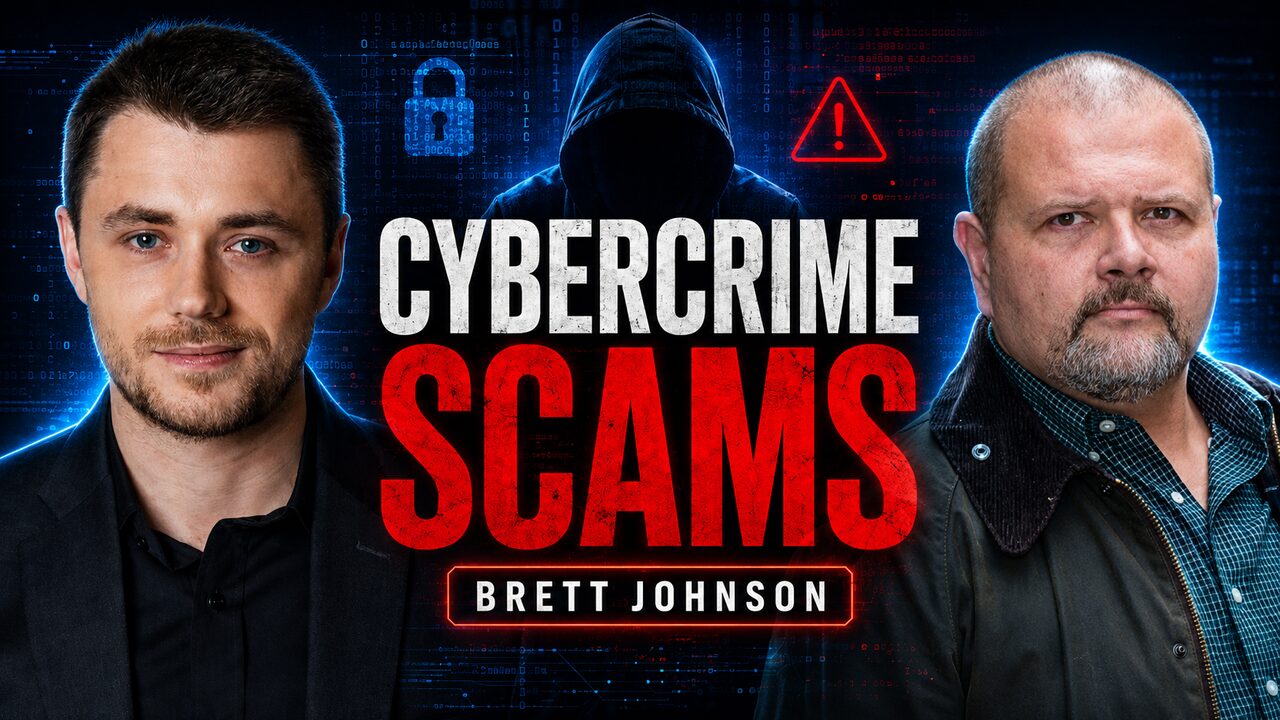
- Brett Johnson says the easiest cash-based crypto attacks today are DeFi rug pulls and social engineering against NFT holders, because many investors take their advice from Reddit and behave like gamblers, not investors.
- According to Johnson, successful online crime requires three necessities: gathering the data, committing the crime, and cashing out. No single criminal masters all three, which forces networking and makes trust the core currency of cybercrime.
- Johnson sees cybercrime migrating from dark web marketplaces to Telegram, Wickr, and Discord. Telegram’s fluid trust mechanism is the main thing holding back an even bigger explosion in crime, he argues.
- Johnson calls ideology the most dangerous criminal motivation: ideologically driven attackers come after targets regardless of security and stay to the bitter end, a pattern he illustrates with Ross Ulbricht and his own time running ShadowCrew.
- Johnson’s safety advice for crypto users: never take investment advice from Reddit or crypto Telegram channels, do real due diligence on teams, white papers, and liquidity, and pause before pressing buy, because scams work by triggering emotional responses.
How Would the Original Internet Godfather Start a Hacking Career Today?
Watch this part · 0:00Kevin Hi guys, welcome at Wavect. Today with two very special guests: Brett Johnson, former US Most Wanted, founder of ShadowCrew, and the Secret Service called him the Original Internet Godfather. And on the other side, we have Erhard Dinhobl, blockchain forensics expert, and today we're going to talk about crypto and scams. And introducing that topic, I would straight jump into that matter and would like to ask you, Brett: if you would be 20 years younger today, and in the same hacking motivation like past then, how would you start your hacking career now?
Brett Oh, how would I start it now? Probably with doing some sort of rug pulls or something like that in DeFi. You know, honestly, or some sort of social engineering attack where I'm trying to steal some of these crazy apes' NFTs. It doesn't seem like it's very difficult to do that. You know, if you look at cybercrime, if you look at what I was doing, you've got three motivations for committing these crimes. You've got status, cash, ideology. If you're looking at crypto, you're looking at cash-based attacks. So what are the easiest ways to do that? Rug pulls look like they're pretty easy right now. I mean, where are people getting their investment advice for crypto? A lot of it comes from Reddit. And let's be honest, if you're getting investment advice from Reddit, you're probably not an investor. You're probably a gambler. So it's not difficult to, unfortunately, it's not difficult to scam individuals like that, because there are such wild swindles. And if you're getting investment advice from Reddit, you're probably not an investor. So it's not difficult to trick people into giving you cash. And that's unfortunate.
Kevin Yeah. Sadly, the market is very immature.
Brett Yeah. Yeah, we need regulation. But unfortunately, the type of regulation we need, we need someone who actually understands what crypto is before we get regulation put in there. And I've not seen really any politician that understands the crypto field at all.
Are NFTs a Big Future or Just Another Bubble?
Watch this part · 2:31Erhard And when you look at the special field from the whole crypto scene, where we're talking about NFTs: will you see currently, with the current situation, a big future in this area, or maybe it's only some kind of a bubble? What do you think about it?
Brett You know, what I think about: when you take Bitcoin, for example, now the precursors to Bitcoin that readily come to mind with me are e-gold, Liberty Reserve. You have the same types of token there, minus the blockchain, all right? Bitcoin comes up, Bitcoin becomes popular, and whether people want to acknowledge it or not, Bitcoin really gets its popularity from Ross Ulbricht and what he does with Silk Road. That's really what gives it a viable use case, and then from there it becomes more mainstream over the years, until today. Today I think this token is valued at $39,000 for Bitcoin. It's down some. But you know, it starts with Ross Ulbricht. It starts with criminal activity, individuals needing an ability to pay for basically their drugs without using PayPal or some way that they could easily be traced. NFTs really, right now, I don't really see there's much of a difference between the early days of Bitcoin and crypto than there is with NFTs. NFTs right now to me look like a very good way to launder money. You know, you can make an NFT, you can buy your own NFT, everything else. I mean, Melania Trump bought her own NFT for $160,000. That's a very nice laundering mechanism all of a sudden. That's what I see right now. I see a lot of laundering going on. I see a very new field where the technology itself is not being used anywhere near the ability that it could be used at.
Brett I mean, basically right now it's JPEGs that are being sold for sometimes millions of dollars. I'm personally thinking about coming up with my own JPEGs of racist stuff in Alabama and calling it, you know, snapshots of the United States, what pops up. Maybe I can make a few hundred thousand, I don't know. Let's do a smart contract. You know, or my United States Most Wanted picture, maybe I can sell it and make a couple of million dollars. What was really funny was, you know, Jack Dorsey with his first tweet. I think the offer on that was, finally, you know, the guy buys it for what, 2.9 million or something like that. He tries to resell it, and the offers were like three, two grand or something. So I mean, right now we're at the beginning stages of that. But you look at that technology and you try and think about applications, what it could actually be applied for. You've got a non-fungible token there on a blockchain. We've been worrying or been thinking about for years: how do you implement the blockchain for identification purposes, for combating fraud, things like that? Well, if you could come up with, say, an NFT that is basically a person's identity, that's not bad. Maybe you've got an avatar built where that person is that identity, where you can go into a website like Amazon or Apple or something like that. You don't have to prove who you are, because that token, which is on the chain, proves who you are. So you don't have to worry about identity verification, you don't have to worry about device ID, you don't have to worry about any of these other aspects, because that token is your online persona. No one else can use it but you. That type of technology to me seems very powerful, but we're nowhere near that.
Brett You know, and the laundering stage and all these other things, and we have to get past that. And I think to get past that, it goes back to that regulation. We've got so many scams, so many scams that are going on, it's every single day. And I don't know if you guys have watched the Netflix thing, The Hunt for the Crypto King. I know that guy. He was a ShadowCrew guy back in the day. His name was Omar Dhanani. He was a money launderer on the ShadowCrew. Serves four years in prison when he gets caught, gets out, partners with another ShadowCrew guy by the name of Cotton, I think Joseph Cotton was his name, and they start up the Quadriga currency exchange in Canada. Cotton goes over to India, mysteriously dies. $236 million worth of crypto disappears. At that point in time, Omar Dhanani changes his name to Michael Patryn. He does not get charged with anything. But what's interesting is that just about two months ago, you had another token called Wonderland Time. And I've not watched the show on Netflix, I don't know if they talk about this or not, but two months ago Wonderland Time was going for over $10,000 per token, until they found out that this Michael Patryn that was involved with Quadriga, he was one of the developers on Wonderland. It crashes to $300 per token. So it's that type of stuff. It's knowing who the developers are. It's having that regulation in place, it's having proper KYC, it's having all these protections in place that's needed. But we're at such a point in the industry that no one that's in power is there to implement the proper regulations. So I mean, I don't know where it ends. I just know it's a bad situation right now, because we're at the cusp of where crypto could actually come in and be able to change some things significantly, and until we cross that, it's just not going to happen.
Could Blockchain Identity Fix Fraud and Fake News?
Watch this part · 8:27Erhard You brought up one very interesting thought, because you said when we have the possibility or the ability to bring identity to the blockchain. I think it's maybe one step further: we have to not only bring identity to the blockchain, but more like identification of everything. And with everything, I mean the only possible link there is that you have some kind of a hash algorithm which makes it possible to hash the reality and bring it to the blockchain, so you have an identification. Exactly, example: from your face I can make a hash value out of your face. And I think that's the missing link.
Brett That is absolutely it. It is. Think about everything: if we can get to that point, if we can just get to that point, all right, where we're going, if we stop this insanity of it being the Wild West of money laundering. If we can get past that, that type of technology has the potential to solve a lot of issues. A lot of issues. It can take care of the fake news problem, all that misinformation that we've got across the line. It can solve a lot, not every bit, but can solve a lot of the fraud problems that are going on across the board, anything from credit card fraud to refund fraud to basic identity theft online. It can solve those types of issues. It can take care of a lot of supply chain problems. I mean, Microsoft is using the blockchain right now to move pharmacy drugs across great distances without losing the drugs, without having to worry about counterfeit drugs being substituted for those real drugs, anything else like that. And they're doing that very effectively. So there are very good uses for the blockchain and for crypto in general, and NFTs.
Brett If we can just cross that gap, if we can get rid of these scams, if we can come up with proper regulation, if we can actually implement good KYC, if we can get to the point where some of these exchanges conduct business properly. I mean, if you look at, yeah, we've got a lot of tokens out there, and it seems to me that sometimes when these tokens are really exploding in price, you know, you've got somebody that's bought, I don't know, three trillion of them for thirty dollars, and then all of a sudden four months later those three trillion tokens are worth four million dollars, and they try to cash it out, which means you have to do that at an exchange. But the exchange, they don't have the money to pay everyone. So what happens? The exchange mysteriously has technical problems for a day and a half, until the token value falls back down. Which we've seen happen. We've seen that happen in exchanges. And still we don't get any regulation that says, hey, no, if you're going to do business, you have to do business properly. You can't just shut down when it comes time to pay out some of these investors, gamblers, whatever you want to call them.
Erhard So yeah, it's interesting. It's interesting. So we noted down so many questions. Maybe, Kevin, you should proceed with the next one so that we get further.
How Do Cybercriminals Find Each Other and Build Trust?
Watch this part · 11:47Kevin Yeah, I think we all agree crypto is full of scams right now, but at least it got better in the last couple of months. But let's go a step back. One big question we would have is: if you start your hacking career now, how would you try to reach out to the right people? Because what you actually say in all your videos and talks is that a hacker or a scammer basically is not good in all three things, like cashing out and so on, but basically needs usually at least two or one other person. How would you get to know them?
Brett So, and I talk about this pretty extensively. There are three necessities to successfully commit online crime: gathering the data, committing the crime, finally cashing out. So what I mean by those necessities: gathering the data is the PII, the personal information, it's the bank account logins, those credentials. It's any information that you need, but it's also whatever tools you may need to help commit that crime. So it's spoofed phone calls, it's RDPs, SOCKS5 proxies, if it's the higher-tier stuff, like Mimikatz or something like that. It's whatever tools are needed. That's under the gathering data aspect. Then you commit the crime, and then finally you cash it out. And when I say cash it out, it's more than just getting someone to wire money to a bank account. You have to be able to convert that wire, those stolen funds, to cash in pocket. You have to be able to do that. If you don't, you're useless. And the issue becomes is that one single criminal can't do all three things, either because of a skill gap, they simply don't have the knowledge to do that. They can commit the crime, they may be able to launder the money properly, but maybe they don't know how to launch a man-in-the-middle attack, gather that data, do the breaches, anything else. Or they can commit the crime, they can gather the data, but they're in a geographic area, so they're in an area where they literally cannot do one of the aspects, and that typically falls in the money laundering, the cashing out aspect, all right? So it's a skill gap or it's a geographic problem that creates that necessity to network with other people.
Brett It used to be, when ShadowCrew was up, before ShadowCrew comes into play, the only avenue you had for that was an IRC session, Internet Relay Chat, a rolling chat board. You had no idea who you were talking to. You couldn't trust them. You couldn't trust anyone. ShadowCrew primarily gave a trust mechanism that criminals could use. Now you could trust those criminal associates. You knew what their knowledge worth was. You knew if you could learn from them, if you could work with them without them ripping you off, things like that. Now, ShadowCrew is all pre-dark web, all right? So over the years, there's been a few things that have changed that have really helped criminals work. The Tor browser, the dark web's there, the cryptocurrency is there. Those are two major changes. Tor worked. If you knew how to use it properly, you could remain somewhat anonymous. And that's a huge caveat, because a lot of users simply don't know how to use it properly, all right? And that's big, because it leads into what criminals are doing now. The next big change was crypto, which allows you to move large amounts of value somewhat anonymously. Again, if you know how to properly do it. Another huge caveat. For example, when Bitcoin came out, a lot of people thought that Bitcoin was anonymous. It's anything but. That blockchain is public. It is not anonymous. Rip somebody off and use just Bitcoin and you're going to prison pretty quickly. But if you know how to do these bridges and transfer over to something like Monero and then back, you can launder it out pretty effectively at that point.
Brett So today, as more and more years went on, and it leads into what causes it, is the effectiveness of law enforcement. Law enforcement has gotten pretty good about identifying where actual darknet marketplace servers are located. They've been pretty good about identifying darknet users. Typically, a darknet marketplace has a lifespan of about 18 to 24 months, until either the market exit scams or law enforcement comes in, shuts it down and arrests a lot of people. So they've been very effective about that. At the same time, you've had a couple of big stories. You had AlphaBay shut down in 2017. Hansa Market follows two weeks later. That created enough paranoia within that community that a lot of cybercriminals started to look elsewhere to commit crime. They started to look at smaller and smaller encrypted messaging services. They realized that the dark web marketplaces were just large beacons for law enforcement, a centralized place where law enforcement could go and target people, make arrests, everything else. So the more experienced criminals started to look elsewhere. So you started to get more and more surface web groups. You started to see criminals on Wickr, on WhatsApp, places like that. Now we've got Telegram, which is very, very effective. Yeah, I mean, it's very effective. It's ran by a Russian guy, owns it. He is very anti-law enforcement. He will not respond to any law enforcement requests. He doesn't want to work with law enforcement.
Brett And what that means is now you've got a surface web application that is very easy to use. You don't really have to have any skill at all to remain pretty anonymous on it, unless you're just posting identifiers, which we see frequently. You see someone that is committing a crime and they will post receipts, they'll post order numbers, they'll do the snapshots of all this stuff, which allows law enforcement to identify who that person is. But the actual program, the application itself of Telegram, is encrypted. You can't get IPs from it, you can't get any of this information. So if you can use it properly, it's very secure, and it's very easy to use. Much easier than the dark web or the Tor browser is to use, much more secure, and user-friendliness. Because of that, we see that a lot of cybercriminals are transitioning to that. Basically, the dark web right now as we used to know it is taking a second seat. The new kid on the block is Telegram, Discord to an extent, channels like that. Wickr is a big one right now. So you see this being used because the ease of use is easier. Users feel much more comfortable doing it. You don't have to have a whole lot of special software to do it, anything else like that.
Is Telegram Replacing the Dark Web for Cybercrime?
Watch this part · 18:49Brett Now, the problem is the trust mechanism on Telegram compared to the way trust is established on a traditional dark web channel. On a dark web forum-type structure, trust is established over a length of time. You've got that large communication channel, that forum-type structure. So if you go on the dark web, you've got Dread right now. So on Dread, you've got users who typically use one username, and that username becomes their brand. They establish that over a set amount of time. You know, by looking at someone's screen name, what their skill level is, if they've ever ripped anyone off, if you can learn from them, if they work well with others, all these other types of things, just by looking at the screen name. On the dark web, you've got vouching systems in place, review systems in place, escrow systems in place, all with that singular purpose of establishing trust with one criminal and another, where they don't know each other's real name, don't know what each other look like, will never meet each other. Telegram's different. Telegram's trust is much more fluid. So on Telegram, trust is primarily established by the rapport that users have with each other, which is odd. So it's really these guys that get in there, and it's typically English speakers that join these channels.
Brett While they're committing crimes or talking about committing crimes, they're also discussing politics. They're discussing their everyday lives, their problems in their lives. They're discussing all these other aspects of their life as they're committing crime. And you can go to these Telegram channels and see this. It's just like, hey, a chitchat is all it is. That helps. It is the primary mechanism that establishes trust on Telegram. You add in that once you get a user in there, like you've got the AIO crime channel, or there's a user called Noir that has several different channels. If users trust him, then they tend to trust the channel overall. But what happens is, anyone can come in that channel. And you see this frequently. Anyone can come in the channel. Anyone can adopt any screen name. They can adopt his screen name if they want to, and just have a little bit of a difference with it, or add a little tag onto it. And it's a completely different thing. It's a completely different user. They come in and they use the trust of that channel to rip off the members of that channel, is what happens.
Brett It's interesting that the way trust works on Telegram is nowhere near as concrete as it is on the dark web. And that results in many more scams on Telegram, criminals scamming other criminals. If they can get the trust mechanism, and if they can really establish, figure out a way to establish real trust on that channel, on that platform, we're looking at a significant change in the way cybercrime operates. And you're looking at the numbers really exploding. And it's not like the numbers haven't been exploding. ShadowCrew, that I ran, when we get shut down in 2004, we ended with 4,000 members. Fast forward to 2017, when AlphaBay gets shut down, 240,000 members. 2019, Black Market gets shut down, 1.15 million members. All of that is pre-pandemic. Pandemic, what happens? Governments institute stimulus programs, typically with no security in place whatsoever. And the numbers really explode at that point. So, but if Telegram gets it ironed out, if they can really figure out how to establish trust with its users, we're going to see a significant increase in crime. Absolutely.
Wouldn't a New Identity Be Safer Than a Criminal Reputation?
Watch this part · 22:36Erhard I have a question here. Usually, if you commit crimes, you do a lot more, basically. And if you do that over a certain period of time, you actually increase the risk of getting too much attention from the authorities. Wouldn't it be more beneficial, for sure with the trade-off of having less trust from the other criminals, to actually just get a new identity?
Brett I would say that trust is paramount, all right? I have to be able to, for example, if I'm a credit card thief, I have to be able to trust that the person that I'm buying stolen credit card data has a good product, that the product is viable, that the available amounts on the cards are high enough that I can commit the types of fraud that I want to commit without having to verify each and every card that I'm buying from that individual. Because when you verify a card, it actually throws up fraud tags when you go to use the card after verification. So I have to be able to trust the seller more than that. I have to be able to make sure that the seller hasn't been arrested or isn't law enforcement, all these other issues. So trust becomes paramount across the board. What I would say is that it's important to not have a large footprint in those environments. So you don't want to be the guy at the top of the heap, because you have a target on your back. Law enforcement is looking to arrest you. And as such, you see a lot of experienced criminals that really know their trade, they know their craft, but you don't really see them online bragging about stuff or trying to become the top player on these channels, all right? The problem with that goes back to the three motivations of cybercrime: status, cash, ideology. Specifically status.
Brett So if you can do something in your criminal group that no one else can do, and understand, some of these criminal groups are now millions of members large. But if you could do something that no one else within your criminal community can do, if you can build ransomware, if you can deploy ransomware, run and deploy bots, things like that, use stolen credit card details to defraud Amazon or Apple, and no one else can do that. If you can do these types of things, you gain the respect of every single person. And that's what I'm talking about. You gain the respect of every single person in that criminal community. And that respect equates to profit. Because when you're respected by everybody, what happens? People come to you and ask questions. People come to you with exploits. Hey, I know this vulnerability with this company. No one else knows it. How can I use it? How can I make money? So you get all this data, all this intel, all these products and services that no one else is getting, and you can use that to profit.
Brett More than that, because you are well respected in that community, it boosts your ego. Because ego plays a huge part in the cybercriminal mindset. It takes ego, it takes knowledge, and it takes willingness to commit these crimes. If that ego boost is there, you think you can do anything, and you're more willing to commit any number of types of crimes at that point. So it helps boost your ego. It gives you value in those communities, where you may live a life where you're a hermit or an introvert or anything else. Online, you're well respected, you're liked. Everybody in that community is looking up to you for guidance, for all these other things. And that's really a lot of the problem with cybercrime. Because you're in these communities where you feel like you're part of a family. And not only that, but you're the head of the family, and that matters. That makes a big difference when it comes to committing online crime.
What Was Brett's Real Motivation, and Why Is Ideology So Dangerous?
Watch this part · 26:38Erhard And what was your motivation?
Brett That's a good question. I typically say that my motivation was cash-based, that I wanted to steal cash. And I say that it was, and there's a truth to that, but it's not the truth, all right? It's what I could do with cash. Because I'm the guy that buys love. I get the worst parts from my mom and my dad. My dad had this fear of the people that he loved leaving. I get that from my dad. My mom, I get the criminal mindset. But with me, I have always had difficulty showing love in a healthy way. I've always went overboard in my relationships, and typically that's been by giving some sort of expensive gift. My love is worth this. And typically I would steal that gift or commit crime to get the money to buy that gift.
Brett So my motivation is kind of ideological. It's that, mixed in with taking care of the people of my tribe, the people that I care about. When I was a criminal, the people that I cared about were those criminal communities. There's a reason that I rose to the top, because I took it very seriously about protecting those people, about educating those people, about making sure that everything ran properly. Now that I'm on the good guy's side, my tribe are these consumers. It's the businesses and people that I used to victimize. I want to make sure that they're protected. I take that very seriously now. But my motivation has typically been that, unhealthy relationships, and it's also been taking care of my tribe. So ideological.
Erhard Didn't you say in your other videos that the ideological hackers are usually [unclear] to stop, basically?
Brett Yes, I did. Yes, I did. So you think about it. Most cash-based attacks are the lowest-hanging fruit. You're going to go after the easiest access that gives the highest return on investment, okay? If you're talking about an ideological attack, doesn't matter if you're lowest-hanging fruit, they're going to come after you regardless. A status-based attack, doesn't matter how much security you've got, they're looking at you. They like that high security. If they can get past that, they impress their people. Running from a cybercrime aspect, from those motivations, okay: I'm head of the group, I'm this Gollumfun character on ShadowCrew, the godfather of the internet. If I'm that, if I'm doing that because of cash, my dedication is not very big. My dedication is such that the first time trouble arises, I'm going to stop and go elsewhere, change names, anything else. But if my motivation is ideological, if my motivation is taking care of the people in my community, then it's different. Then I'm going to weather that storm. I'm going to stay there to the bitter end and make sure everyone's protected as much as I can possibly protect them. Which is what you see over and over and over again.
Brett Ross Ulbricht, for example, with Silk Road. He did not set up Silk Road to make money. We know that. When they arrested him, they arrested him at the public library in San Francisco. They confiscated $24 million worth of Bitcoin back then. Now it's over a billion dollars' worth, is what they got from him. They confiscated that from him. He had never really spent any of the money. He was living in a room, sleeping on a mattress on the floor. He had taken one vacation the entire length of time he ran ShadowCrew. He started that site out of [unclear]. He believed he could change the world. He had some cognitive dissonance, because you can't change the world by running a drug trafficking site, which is what Silk Road was. But did he change the world at the end of the day? Maybe. We have to see how crypto actually ends up, because that's really where it gets its start. So ideology, it matters. And there's a reason today that I really despise criminals who are motivated by ideology, because I used to be one. I know what that stuff is like.
Has Brett Ever Been Scammed Himself?
Watch this part · 31:07Erhard Yeah. And one not personal question, but maybe: have you ever been victim of a scam?
Brett Oh yeah, tons. Tons. Absolutely. Yeah. And that's one of the things that's kind of weird. When you're a criminal, especially a cybercriminal, you get scammed all the time. You'll buy products that don't work, somebody will rip you off for money or anything else. And the thing is, is that most criminals, they reason it out saying, well, that's just the way this business works, and you carry on with things. Have I been scammed in real life, not being a criminal? I have. And the feeling is much different. Much different. It's not just doing business. You feel victimized. I mean, I felt victimized when it happened. I carried a grudge for a long time. I'm still upset about it. So absolutely, I've been victimized on both sides of the fence, and the feeling is far different depending on which side of the fence you're on when it happens.
What Are the Top Three Actions to Stay Safer in Crypto?
Watch this part · 32:17Erhard Kevin, want to proceed?
Kevin Yeah, felt like a little bit emotional right now, so I got dragged in that. Okay, we basically got two questions from the audience. I would love to ask them, if that's okay for you.
Brett Sure.
Kevin What are your top three actions to be more secure than the majority of the crypto users?
Brett Top three actions. Do not get investment advice from Reddit. Stay away from Telegram. There's a lot of crypto Telegram channels on Telegram. I'm going to tell you that a lot of those channels have a lot of bots on them, and they simply exist to drive your emotional response to that token. Understand that a scam works primarily because it's a criminal getting you to not act in a reasonable, rational manner. That criminal wants you to have an emotional response to something, and we see that every day. [unclear] investment advice, and it's not about good investment advice, it's about having an emotional response to this token. You're going to make a lot of money, you're going to become rich, you can quit your job. You can do all this stuff. All you have to do is hold, buy more, buy more, buy more. It's that emotional response. So I would say, be careful where you're getting your investment advice from. Get it from a respectable source, all right?
Brett Also, due diligence. Due diligence. Do not just invest in something because you think it's going to do well or someone's telling you that. Understand who developed it. What technology is there? How does it differ from the thousands of other tokens that are out there? If you're looking at NFTs, understand that a lot, not just NFTs, but crypto in general, a lot of these tokens are simply pyramid schemes. The more users you get, the more people that are making money. But at the end of the day, a lot of the later users or investors or gamblers or whatever you want to call them, they're going to lose money. Be aware of the token. Do due diligence properly. Look at everything. Make sure that if you're in DeFi, make sure the liquidity wallet is locked down. Make sure you know who the actual people are who developed the token, because you've got a lot of tokens that are developed by anonymous teams. That's a huge flag. So understand exactly what's going on.
Brett Read about the scams, the crimes that's going out there. Understand that you may think that you're smarter than these scammers. You're not. You are not. Anyone can be scammed. Anyone can be victimized. You are not smarter than the people who are doing the scamming. This is their job. It's their career. This is what they do for a living. They're out to get you. It doesn't matter if it's for $5. It doesn't matter if it's for $500,000. They're going to take you for as much as they possibly can. Understand that. More than anything, it's do not react in a knee-jerk type fashion. Make sure that any choice that you're making is not made out of desperation, and it's not made without consideration of what's going on. Take a moment. Pause before you press that buy button.
Does That Mean You Cannot Invest in Token Launches?
Watch this part · 36:06Kevin Okay. Great advice. Thank you. Basically, what that would mean is that you can't actually invest into token launches, because...
Brett You can.
Kevin Yeah, a contract is usually deploying just in time.
Brett Sure. And there are some very good token launches where you can make money. Absolutely. But do you know who the team is? Have you read the white paper? Does it look like there's actually been some real work put in the white paper, or have they copy and pasted off some weird website somewhere? Because we've all seen that. All right. Do not pay attention to what someone in a social media channel is saying about how it's going to go to the moon. That doesn't mean anything. That's just someone trying to get you to give money so that their tokens increase in value, so that they can then cash out and leave you holding the worthless bag. So do the research. Do the research. It's more than just buying a lottery ticket. Do the research. Pick a token that's actually worth something, that will actually go somewhere.
Brett Now, that being said, you know, right now on NFTs, we've got a lot of movement on these NFTs that, for some odd reason, explode in value. I don't know why. I don't get it. I don't get it. I don't need to get it. I just know it happens. But the chances of you losing money on NFTs are much higher than the chances of you becoming rich on NFTs. If everyone could become rich on them, everyone would. You're not seeing that. You are seeing some really big increases in value. But even there, do your research. That's the big one.
Kevin That's the interesting thing, basically, with NFTs. Maybe the floor is around 5 ETH or something like that. But try to sell it. If no one buys it, you're still holding the bag, right?
Brett You're still holding the bag. Look at that poor guy that bought Jack Dorsey's tweet. He thought, you know, he thought he's going to give a couple of million dollars for it, come back and sell it for 40 million. And they offered him like sixteen hundred dollars.
Kevin Man, I would be upset on that.
Brett Personally, I don't know. Honestly, I didn't think Jack Dorsey's tweet was worth anything, but that's just me.
Kevin Yeah, that's basically a great sign that the market actually matures, right?
Brett Exactly. Exactly. That's a very good way to look at it. That's a sign that, hey, there is some reason, some logic that is actually coming into that marketplace now, which means it's going to mature, which means that the technology itself is going to actually [unclear]. We're going to see the real products that can be built with that type of technology, which is pretty exciting when you think about it. But right now, you better be careful right now.
Are Crypto and Cybercrime Merging Together?
Watch this part · 39:12Erhard So, Kevin, the last question we have, because I have also one more question in my mind, which is interesting to myself.
Kevin Feel free to ask. I think the other question has been answered already.
Erhard Okay. Okay. Then, you already mentioned that Telegram and all these kind of messaging services and so on. Currently, what I've seen, because I worked also for the police for three years, and what I've seen is that these messaging services, where those criminals are online and sell their stuff and so on, and the crypto scene, it's some kind of loosely coupled currently. Do you see currently a tendency where it goes, let's say, in two years, maybe they are more and more merging together? Or where do you see it?
Brett I would say, where does this all, where does it go? Right now, I think you see that merging, especially when you're looking at that laundering mechanism. Because, so, you've got a criminal. I don't care if they're trafficking drugs, I don't care if it's stolen identity information or financial information or what have you. There has to be a way for you to put cash in pockets. So what happens, say you get somebody to convince them to send you Bitcoin. It's easy enough at that point to take the Bitcoin, buy Monero with it, which is now anonymous. And then once you buy Monero, come back into Bitcoin and let those prices continue to rise, which is what's happening.
Brett What I'm seeing on Telegram, which is really interesting, is those constant discussions on criminal channels of where crypto is going. What are you investing in? What's the metaverse look like? Where's fraud going in that? What do I need to buy in the metaverse? What do I need to invest in? As a matter of fact, on Telegram right now, there's a user named Radiant, who is a very big fraudster. He's well known in the fraud community. He runs an investment channel that advises other criminals on what to invest in. It gives the flags, the tracking, everything else. Today we're looking at this token, today popping up this percent, and he gives this advice. So you're seeing that across the board. And I think we're going to continue to see that until we really lock in KYC, that know your customer, until we start to look at some of these exchanges that are known for laundering money for criminals, things like that. Until we're able to get this stuff under control, I really see that relationship between crypto and criminal activity continuing to merge together.
Erhard Wow. Very, very interesting. Thank you.
Brett Thank you.
Kevin Erhard, do you have any other questions?
Erhard Actually not. It was a question.
Kevin Great pleasure to talk to you.
Brett You guys are great.
Kevin Thank you.
Brett You too. You too, man.
Erhard You too, yeah.
Brett Hey, if you want me to come back at any time, you just let me know. I had an absolute pleasure talking to you all today.
Kevin Thank you.
Erhard Thanks really much.
Kevin Man, maybe when you are going to come visit Austria or the north, yeah?
Brett Yes, yes.
Kevin Just give us a hint. We will take you around and show you the best sides of Austria.
Brett You know what? I'm going to take you up on that. You can bet on that.
Kevin I bet on that, 100 percent. Come on.
Brett All right.
Erhard Come here to Austria. We're looking forward.
Brett All right. Take care. It's been a pleasure.
Kevin Thanks, Brett. See you.
Brett Okay. All right. Bye-bye.
Erhard It was a pleasure. Bye.
Brett Bye.
Kevin Bye-bye.
Questions this episode answers
Want this kind of thinking applied to your product?
We build MVPs and act as fractional CTOs for founders who'd rather ship than talk.