Cut the BS: How to Actually Raise Money
Astan Morarji Exited Founder · Angel Investor
Astan Morarji has sat on both sides of the table: exited founder and angel investor. A conversation about fundraising without the theater, and what actually gets founders funded.
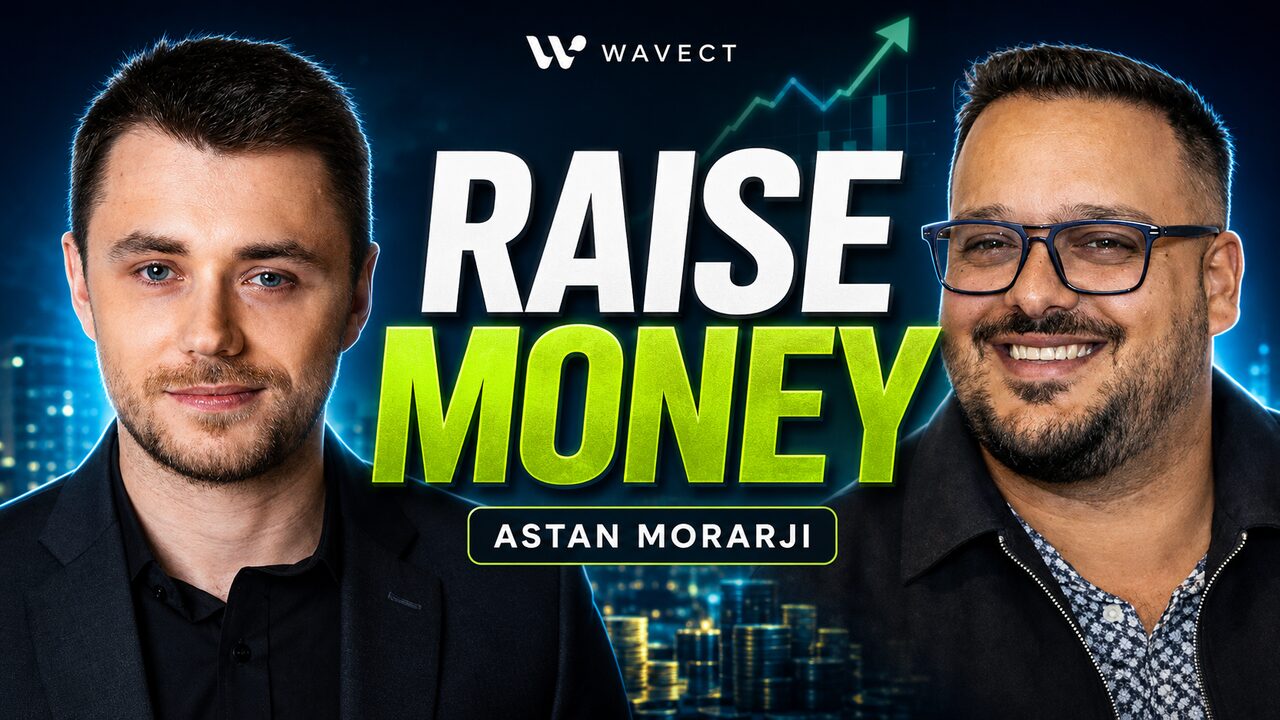
- Astan Morarji argues that a business which relies on raising money right now has a flawed strategy. Build community, do the unglamorous market research, and get to know your customers before you build or raise.
- His rule on timing: raise when it is strategically the right moment, not when you are desperate. Investors made their wealth by being strategic and can smell a badly timed raise.
- Astan says a pitch deck has exactly one purpose, to win the next meeting. Personality, storytelling and genuine emotion cut through where ten template slides full of stats do not.
- His clearest red flags: raise-first founders who can do nothing without capital, founders who rush and push investors, and fakeness or stretched truth in the deck.
- Astan believes early-stage investors back people, not data. Get to know a fund’s portfolio founders, show up at events without pitching, and build a public profile, so the relationship opens the door.
Who is Astan Morarji and how did he make his money?
Watch this part · 0:00Kevin Hi everyone, welcome at Wavect. Today with Astan, who had already four exits and is an eight-figure business investor and advisor. He also founded over 30 businesses in the last 12 years. And today, as you might guess, we're talking about how to actually raise money. Thank you, Astan, for being here. It's really an honor and a pleasure having you here. And starting out, I would like to give you the opportunity to let us know whatever you're up to right now. And yeah, then let's see where it goes.
Astan Great. Thanks, Kevin. It's great to actually finally meet you. See, I think it's a really important intro, because a lot of people see me as successful having four exits, which is accumulating a lot of capital and a great amount of wealth. But a lot of people also miss the failures, as you said. So I've launched 30 businesses. Many haven't gone the way they should have gone. But in those failures, I've learned a lot and built a lot. And I think that's what's enabled me to become the person I am today. And as you say, I'm a business owner. I own a group. So I don't own a single business. I own multiple that all report into a group. And I lead the businesses from a group level now, which means every business I own has their own directors, has their own reporting lines, which enables me to support and just lead it from a strategic point of view. But I'm also an investor. And that is really what I focus on now, which is investing the capital that I have. I have a significant holding in Bitcoin and Ethereum, you'll be pleased or maybe not so pleased to hear. We won't talk about my buying levels on those two at the moment. But I'm a big believer in the future of Web3. I'm also a big believer in giving other people the opportunity to build their business. And often that involves early stage funding. And I think I'm one of the few people that is happy to commit capital to help people get their projects and their businesses and companies. So I hope that during this session, I can help as many of the listeners as possible.
Does Astan still believe in Web3 after the crash?
Watch this part · 2:00Kevin Awesome. Thanks for that input. I have to ask this now. You didn't buy in October, November last year, Bitcoin?
Astan I think I should just stay quiet. No, I wasn't that terrible, but I'm not going to act like I was. I'm definitely not a guru at that stage. Yeah, things are looking very red at the moment. But for me, honestly, joking aside, I'm a big believer in the future of Web3. So I'm not a believer, actually, in a lot of the hype. So I didn't get involved in the hype. I didn't buy into lots of NFTs, and I didn't buy all that. But I'm a huge believer in the fact that Web3 is the future. So wherever my investments are, it's to see in the next five to ten years. I believe that they're solid investments. But yeah, at the moment and in the short term, they're best to ignore that, I think.
How should you start a business in a down market?
Watch this part · 2:49Kevin Love it. Yeah. Since I think what would be particularly interesting in the Web3 space, right, when we're already talking about it: my feeling is that many people who have never founded any kind of business are rushing into it, because they think it's maybe easier. Maybe it was last year, or it definitely was right then when doing some kind of boring businesses, as many people did. But how would you, from your expertise, say one should actually start a business right now, with that market that we have? And what are the things that people should take care of, actually?
Astan Sure. I think with the current sentiments and the way that the markets are playing, if your business relies on the fact that you must raise funding now, I think that's a flawed strategy. And I think a lot of people don't want to call that out. It means that there are things that you just won't be able to do without funding. And nobody's saying that you should come up with the impossible. What I advise, I say, do what you can without the funding. I think that you can build up momentum, you can build communities, you can build followings. There's so many things you can do that does not require a significant amount of funding. And actually, it's that, to some extent, frustrating side that a lot of people don't want to focus on, which is getting to know your customers, getting to know the members, getting to know really what they want from the thing that you're proposing. And that's classically market research. It's the stuff that nobody wants to do anymore. As you say, Kevin, they jump in, they want to jump and ride a trend, but they actually don't know what they're riding. They just see the big money, and whatever else, the wealth and the fame, and they think it's the right journey for them.
Astan So for me, no matter what position you're in, and I would actually say this applies to Web2, Web3, any business, I'd be focused on building up a community or a following, the people that you want to service. Because that is something that you can do. And actually, it works well because you are anti-selling. It's the thing that you don't want to be doing. You don't want to sell to people off the bat. Nobody likes to be sold to. What people want to do is feel special, feel human, feel like they've got that connection. And actually, the beautiful thing about Web3 is, Web3 has been the biggest driver of selling community to the world, to make people realize community really matters. And I think if you are in Web3, or, like I say, any other industry, that's what I'd be doing. And it's what I do now. We build out ventures. We have a venture studio. We build out companies. The first stage is always: get to know the target profile as well as you physically can. And that does not require a lot of capital to make it happen. And it's reversing that old saying, you'll remember this, 2008, it was always build and they'll come. And now that is the worst advice you've probably ever received. I just flip it and I say, make them come into a space, get to understand them, and build later. I think there is a rush at the moment to build. And I think that's really, really risky. And without capital, and without banking on capital, you're often already enacting a full strategy. So, yeah, that would be my general advice for anyone. If you have already started building, there's obviously always positive points about that. But maybe what we can go into is the actual true reality and difficulty of raising a very early stage round. I think that is, at the moment, something that is subject to a big fallacy, that it's quite easy to raise an early stage round from very wealthy people that have money to blow. It's just not the truth.
When is the best time to raise money for a startup?
Watch this part · 6:05Kevin Yeah, I think nobody is actually just raising money, right? No matter how much money you actually accumulated over the years, it's still a lot of money, and those people are usually very smart. So why should they just throw millions or hundreds of thousands of dollars at random people, right?
Astan Absolutely. Yeah. People always say to me, when's the best time to raise money? I always say to them: when strategically it is the right time to raise money. That's the answer. Because the people you're dealing with are not just random people. They've normally made a lot of wealth through being exceptionally strategic and tactical. Investors are not stupid. And I think there's this thing that people are just wealthy and they're willing to blow out money. Often people have made money from making very wise decisions. They're not new to the game that you're playing in. They understand it. So when you raise money is when strategically and tactically you have the strongest voice to the investors: this is why we now need this money. This is what we're going to be doing. This is how we're going to get the returns. And I just think there's a lot of fallacy that there's just so much capital, that people are just willing to deploy their capital because they've got nothing else to do with it. It's just not true.
Do you need to build a product before you raise funding?
Watch this part · 7:10Kevin Yeah, 100 percent agree. I'm also the opinion, as you said, you can actually always start, right? There are always tons of things that you can actually do to increase the odds of your success, and to get more support, to validate your idea and everything. And even after all that, even if you come to the point where you actually should build something, there are tons of no-code, low-code solutions out there. Even if you're not a developer, and that comes from a developer, then you can build stuff. A simple MVP, prototype, anything, right?
Astan Absolutely. Yeah, absolutely. I think there is this idea that you have to build. And I think that's a really strange narrative that we live in, that everyone thinks to start a business in Web2, Web3, anywhere, you must build something. And actually, that's not true. When you look at the mechanics of what makes a business work, I always call a business a vehicle, because every vehicle, an automotive, a car vehicle, it has different parts that you need to make the vehicle work. And that's what a business is. It's not just build the product and it just flies. That's not how the vehicle works. A great product. We've seen many great products fail, right? You as a developer, Kevin, I'm sure you've seen many great technical products that never see the light of day, right? Because it's not the only thing that matters. That's not how business works. And unfortunately, that's the reality of the world we live in. Great tech products don't always surface, and actually dreadful tech products can surface and do exceptionally well, because it's just that vehicle. It requires a lot more, as you said, than just building. And I think that's a great narrative to be changing, and one I definitely support.
Kevin Yeah, 100 percent. As you just said, I think this, let's say, not sure if that's the right word, but narrative, is actually changing, right? People recognize it's about, I would say, community, which is nothing else than branding, marketing and all that combined. Just a new fancy word, or an old word reused, and all these kinds of things. Customer support, which is also part of community now, writing on Discord and all these kinds of things. Those aspects are not new. And in general, many things that worked for decades are still applicable to new companies. And I think, as you said, going that route, actually thinking in a strategic manner, building something where you think that's actually a company, which doesn't rely on funding, which can actually produce something. That should be the goal for every company.
What should founders actually do with the money they raise?
Watch this part · 9:58Astan Yeah, I think you're picking up on the flaw of funding, right? That you can get funding and produce nothing, and that seems to be acceptable. But I love what you touch on there, because it's that idea, and I stress this to every Web3 founder or anyone involved in Web3, that you can still learn a heck of a lot from Web2 businesses. And actually, you learn what they did wrong as well. You see the things that they actually fundamentally got wrong, particularly from a funding perspective, how the use of funds was always wrong. But equally, in turn, it doesn't mean any of that doesn't apply to Web3. There's still an immense amount of that that's going to apply. I think Web3 has got a bigger vision attachment. And I think for investors like myself, that's really important. One of the biggest issues I see in founders is they're trying to raise funding for something that, frankly, is either just really simple, and I'm not saying that's a bad business, I'm saying that's bad for funding, if you're raising really simple, or you're just reinventing a wheel or something, and you don't actually have that big vision, you don't see something changing.
Astan And something I love about Web3: the founders that come to me are the ones that say, I want to change an entire industry. And people will laugh at them, but they are normally the ones that will see the funding, because investors are looking for you to make change and to drive change. They're not just looking for you to do something 1 percent better, because often the returns are just not good enough. It does go on to the point, you kind of joked on it before, about the use of funding. Because the fact is, you can raise funding and do very little, and you just keep raising and raising and raising something. That's something I'm very critical of, which is the existing funding mechanism, particularly the likes of the venture capital mechanism that's driven from the US. That's been very toxic, I think. And I also think that's a great driver that Web3 is going to bring in. So if we can change the way capital is allocated, I think we will change the way projects are funded, and we'll fundamentally change the way industries in the world work, I hope anyway.
Kevin Yeah. In general, as you also just implied, basically, you have to use these funds effectively. If you just get five million out of the blue and you don't have an idea on how to grow a business, that won't help you much.
Astan No, absolutely. And the thing is, if you manage to raise five million you don't have to use to run a business, then, wow, number one, well done for doing that on the one hand, because it's quite incredible. But then the reality is, you're just delaying an inevitability, which is when you come to the next raise, you're going to really struggle. Because when you've raised five million dollars, the first thing an institution, an organization looks at is they go, well, what did you do? If you're a founder of Web3, you go, well, I've got this great vision, but actually I didn't really do a lot. We managed to blow the five million and didn't really achieve anything. You're never going to raise again. That's the reality of raising. You raised the first round. It is now a journey. And to get to the next level, you have to be able to show that you've used the funds in the way that you felt was the right way of doing it, and you have grown your business. That's really important. It's when the intangible becomes tangible. It's no longer about your vision. It's about what did you actually do? What did you actually achieve? Where are the metrics? Where's the data? And that's a really big pressure point. But B, as you say, it goes back to the point: if you're going to start raising, you need to be confident that you can actually deploy funds. And it's funny, because a lot of founders think they are, until you get the money wired. And then you've got, like, whatever, five million bucks sitting in your bank account, and the reality hits home. Like, wow, I've got to start deploying this. And I'm now responsible and accountable. And that's a decision not every founder needs to take. Right, Kevin? Not every founder needs to raise. I'm sure you'll agree. You would have seen founders everywhere that are great at what they do and don't have to raise funding. And it's something I absolutely stand by as well.
What makes a pitch deck stand out to investors?
Watch this part · 13:26Kevin Yeah, 100 percent. I'm a big advocate of bootstrapping, by the way. Yeah, 100 percent agree. One question that might arise now, when raising funds in general: I have seen many myself, even though I'm not an investor, but how should a pitch actually look like? Because I'm sure you get these thrown at you on a constant basis, and you would definitely know what's working and what's not.
Astan Yeah, I think it's a really important question. So we worked out, in August I received over 400 decks in a month, and I'm a single investor. So you can imagine really well-known funds are receiving thousands every month. It's insane, actually, the demand that's there. I think, to annoyingly answer your question, there isn't a right answer. And the reason why is because every deck is different. Every business is different. Every project is different. But I think one of the things that founders forget is your deck is there to serve a purpose. And when you ask founders, what's that purpose? A lot of them say, to raise money. And I say, that's where you're absolutely wrong. Your deck is there to get a tiny bit of attention and to drive another meeting. That is the only purpose of your deck. And this is why, when you say about what makes a good deck, the good deck is the one that enables an investor who is swamped with decks to capture a bit of attention and go, I want to chat to these people. That's what makes a good deck. And this is what, across the internet everywhere, is this big fallacy: you need to have this slide, that slide, that slide, beautiful images, bad looking decks are crap, and all this stuff. And all of that is still, it's all flawed. They're missing the point. Your deck is there to get an investor to go, I think I want to chat to this person. Right?
Astan And I think that's why, when I talk about a deck, I say, think about the purpose of the deck. The personality. The amount of bland and boring decks I see on a daily basis, I can't even tell you how unfulfilling it is that you see the same sort of deck every day. So many people are afraid to be themselves. And I think that's a real shame. I love seeing founders become themselves through their deck: personality, swearing, jokes, banter, memes. I don't care what it is. Grab a bit of attention, because everyone else is just following a template. Here's this. This is that. And you're not going to grab their attention when you're sending a deck like that. So I think I'm less about the content, because I truly believe every investor is different. So don't try and find a template that tells you this is exactly what makes a deck win, because that's just flawed. It doesn't work. If that was the case, everyone would get through to a next stage meeting. And as you probably know, the number of decks versus the number of meetings is abysmal. It's tiny. I suspect it's less than a single percent. So I think what goes in a deck is your personality, your, I think, storytelling. Honestly, I think that's probably got a bit lost in the hype of what storytelling really means. But I do really believe that every investor like me is a human. So we are, what we hope we are, attracted by emotion. So if your deck can invoke emotion, that is a better chance of getting that investor to think twice.
Astan So recently I had a deck that was all about how somebody's family relative couldn't see somebody before they passed away, and how sad it was. And the thing is, it was a real, genuine story. It wasn't hype. It was to do with the business, which was healthcare tech. And it really made me think, this tiny young girl, it made me think of my daughter. And the truth is, I didn't care about anything else after that stage. I wanted to talk to that founder. Didn't matter about the market size, the team, anything else, because they invoked emotion. And I've got loads of examples. The one on the dating side, where the founder literally starts with: where would you like to see your children date? Tinder, this place, this place or this place? And immediately it's like, what a smart way of opening, because it's true. I don't know. Who knows? I don't think you want her on there. And it's a way of invoking that emotion. And it doesn't work with every investor. And that's absolutely fine, because you don't want every investor on your cap table. You want investors that like you, get along with you, like your brand, like your mission, like your project. So don't be afraid to be yourself, and build a story out of that project that you're trying to create. And I think that's a really smart way of creating a deck.
Astan And it's what nobody does. Everyone just goes through ten boring slides full of data, because they think stats matter. And actually, remember what the purpose of that deck is: get another meeting. Investors are not going to invest into a dead market. They're not going to invest in you if they think you're an idiot. Don't set out the really obvious stuff, because that's highly frustrating. Like, this idea that investors are willing to back teams that are in dead markets. Well, don't be so stupid. They don't need to see your market size. They'll make that decision very quickly. I think you're in a big enough market. I think you're in a tiny market, I don't want to see you. What you want to do is pull on those strings. And I'm not saying that everything needs to be, like, heartwarming. Emotions are vast. They can be positive. They can be exciting. You can really criticise Web3. What Web3 founders don't do enough is criticise the status quo. A lot of things are happening more when you look at insurance products, for example, and how terrible insurance claims are administered, and how unfair it is on the average Joe. You could do that. But a lot of them don't. A lot of them go straight into the admin of a pitch deck. So sorry for a very long answer, but it's something I feel really deeply about. Because the truth is, I hate pitch decks. I'm not afraid to admit that. And I believe every investor hates pitch decks. They're just not willing to admit it, because you get swamped by them. And there's so much norm that it's getting very boring. If you're a founder and you're listening to this, that is the one way you can separate yourself: make that deck different.
How confident do you need to be when pitching investors?
Watch this part · 19:06Kevin Yeah, it definitely takes a lot of, let's say, you need to be really brave and really confident in your concept, right? And usually, I think, many founders aren't that way at first, right? Because most people, in the first round, most of the time you're still in the I-don't-know-if-this-works right behind your back, even though you have all these things prepared and so on. So, I really love this.
Astan Thanks.
Kevin Although, that's a cool way to actually approach pitch decks.
Astan Can I jump in just quickly?
Kevin Yeah.
Astan Just to go on one of your points there, because I think you raise a really good point about the fear, right? But what I'd say to any founder listening to that is, if that's you, no investor is actually expecting you to get it completely right. In fact, the expectation is you'll probably get half of it wrong, and you'll be able to survive the other half. So I want to say to founders, don't be fearful if you feel like you haven't got it right. And I think humility is very important. I think a lot of people lack humility, and it's good to be humble and to recognize: I've got weaknesses. This thing could go wrong. But in turn, if you're expecting investors to deploy six figures, seven figures of their own capital, you can't expect them to deploy it if you've not got the confidence in yourself. That's what you've got to be able to show. Who knows whether I can change an industry, but I'm really confident that I'm going to give it the best shot I can. That's what an investor wants to hear. Not, I'm the greatest, I will change this industry. Because then you're like, well, no, you don't know what you're talking about. And in turn, like, who knows? I don't know. I'm too worried. I can't say that. What happens if I'm lying? Well, nobody's asking you to come across like that. You've got to really find that middle ground. But I just think that's a great observation. For me, being on the other side, it's easy for me to say that, like, be confident. But I get your point. Not every founder will feel like that, but I hope that they can see you don't need to be fearful of getting it all right, but you do need to have that confidence in yourself in order to execute.
Kevin I love it. Yep. In the end, be authentic. Right?
Astan Absolutely.
Kevin Because if you already do everything right, why do you need the money from an investor?
Astan Precisely. Exactly. And authenticity goes to connection with an investor. That's what I think is really important. I wish investors were honest enough to say we back people we like, but everyone can't say that, there's too much PC-ness to that, but it's just a fact of life. We connect with people that we vibe with. And it doesn't matter about where you're located, your background and stuff. Often that's all on these hidden things, you build this immediate connection, just like you and I did. We're very different fields, but we connected really well on LinkedIn. You want that from your investors. You want your investors to really like you, and you want to like them. That goes down to authenticity and not faking your true self. Because that's very important. And it's ironically a great way to filter out of the crowd. It's just to be yourself and be authentic.
Kevin Yeah, 100 percent. I think especially, as you said, on LinkedIn itself, actually being your true self on social media, I think that's somewhat a comparison to when you're actually pitching to an investor directly. Because instead of an investor, you have hundreds or even thousands of people. And that's a lot of people judging you if you say something wrong. So, yeah, we really love that.
What are the red flags that make investors say no?
Watch this part · 22:22Kevin Speaking of things one should do: are there some kind of red flags, or things where you say, if I see that in a pitch deck or during a pitch, you're instant out?
Astan Yeah. How long do we have? No, the truth is, I think there are red flags. I would like to caveat and say these are mine. So I'm just spitting them out where I say they're, like, immediate flags. But I would say a lot of investors share these flags, particularly early stage. Let me just be clear: this is not for the guys that already raised millions and are going to raise tens of millions. These are for your first time raisers. Yeah, I think these are really, really clear red flags. Firstly is if you are what I call a raise-first founder. It means you can't do anything until you've raised money. It's absolutely clear. You're just not capable of doing anything else. That to me is an absolute red flag, because you don't understand business. You don't understand bootstrapping. Right? As I said earlier, Kevin, on the importance of bootstrapping. You think money is the answer to your problems in business, maybe in life as well. That is an absolute fallacy. It is the clearest red flag I'll ever get. And when I say that, a lot of founders go, but I can't do anything without capital. And we've already discussed that and said there are many things you can do without capital. And if you are the type of founder that thinks you can't, I genuinely think you will struggle to raise in your lifetime. I really do, because I think that is such a clear red flag to an investor, that you can't do something without money.
Astan I talked earlier about humility. I think that also comes down to not coming across like arrogant. I think anybody who comes across arrogant, like they're demanding. And this point, which is being rushed, that is a big red flag to me. I don't like founders that are pushing me, because normally you're pushing for one reason: because you're desperate for the money. And if you're desperate for the money, you've not timed your raise properly. You're probably not operating a good business. That's how it works. It means you're not giving me any level of confidence that you can actually manage it, that you can actually manage money, if you're really pushing me to come into the raise. There are very few exceptions, but generally I think that's a fair statement. And I'm not saying founders should be always waiting, because that's very unfair. But I am saying that if you push me as an investor, and you keep pushing me to get involved, it's a red flag, because it's often unjustified. Very rarely do you actually have to have a raise deadline, if that makes sense. It's actually rare. You don't need to be doing that. You just keep raising, in theory. Keep your investors warm. Don't push me in that respect.
Astan And I think another red flag, another final one I'd say, is fakeness. I believe investors can really pick out fake stuff very quickly. It's not just in the founders themselves. It's in the information they present, the data they present. When we talk about slides, my favorite slide on the deck is the competition. Oh, I love that. I just know every founder does. They go, I know, let me pick out all the competitors, and I'll pick out the most minute things that are different, and I can have a green tick next to my startup and a red cross against everyone else's. And it's like, well, why are you doing that? What we really want to see is: find a big competitor and genuinely show where your value difference is. Don't be like, yeah, well, their brand starts with a C, our brand starts with a B, green tick. It just looks ridiculous. And I think there's a lot of things that founders do, I wouldn't say they lie, but there are a lot of, like, stretchings of the truth that they put in the deck, or they put in information. That is a big no-no, because actually it comes down to knowing that you're an integral character. Integrity is very important to investors, in the founders that they back. So I think you have to demonstrate integrity as soon as possible. And that is the way that you present yourself on a pitch. So I think they would definitely be my red flags. But I have to be honest, a lot of investors share red flags, and a lot of them don't. And unfortunately, that's just a harsh reality at the moment of fundraising, which isn't easy.
Why do relationships matter more than your pitch deck?
Watch this part · 26:04Kevin In the end, it's all about humans. But if you, as you said, don't have that much integrity, or being like your true self, it's always the same, right? Basically, people only buy from people they like, right? Trust and, yeah, know. So basically the same should apply here.
Astan Absolutely. Building relationships, right? That's what's really important, is to have that relationship. And as you say, relationships are human to human. It doesn't actually matter about the job role or their background or anything else. It should be human to human. And actually, on the fundraising side, that is actually big to raising money, having the relationships. It's not actually about your deck. It's actually not about the industry or anything else. I fundamentally believe you will raise money in a far, far easier and simpler way if you have the relationships, or relationship, with the investor. That is really important. And that means, don't go off pitching at them. Don't go off selling at them. Try and build a relationship. As you say, talk about stuff that you may actually have in line. Many investors are just very normal people. They've got families, got dogs, like football. You don't have to go in flying with, hey, I'm raising five million dollars, do you mind chucking me a bit of cash? You can just go in with, hope you enjoyed your family trip in Greece. We went there last year. It was really cool. It's just little things like that is what enables you to really start slowly building up the relationship. And to an investor, you're just not another one of the thousands that's trying to immediately pitch them.
Kevin I love it. Yeah. It definitely might always a little bit depend on the sector you are in, right? Because, 100 percent agree, I think that's maybe more usual than in maybe traditional finance. Those investors are different, for sure. So, but 100 percent agree. It's building relationships. I think in any part of your business it's essential. It's actually having people wanting you to succeed. I think that's actually a rocket start. It's a rocket right behind your back. It helps you to the next level, because those people really want to support you throughout the journey. And that's what it takes, usually.
Astan Oh, for sure. I think it's great that you say that. And I think it's great that you've understood that. To me, that is actually what makes the brilliant founder and a brilliant leader: knowing that you can move people and get people to back you. Because that applies across every stakeholder: partners, suppliers, employees, customers, community members, investors. It doesn't matter who it is. That is one of those secret traits that you need to try and have. And actually, the funny thing is, it's really easy to build. It just requires you being human, and trying to become known for something, build relationships, be empathetic. It's all these things you don't need to read from a book or go on a course to become. And actually, it goes to the point of, I always get asked this question, which is very difficult, which is, what makes a great founder? And you basically just answered it. It's all the things that you don't think of that makes a great founder. It's actually not knowing balance sheets and profit and loss accounts. It's actually not about being technically the best developer on the planet, et cetera, et cetera, et cetera. What makes a really good founder? And you'll see this in those that are really successful: are actually those that are focused on all those hidden traits that nobody wants to focus on. And that also goes to the core of being a leader, having people follow you fundamentally. So, yeah, I think it's great that you've picked up on that point. And I love it as a plus point of Web3, because you are right to say it's far more acceptable in Web3, and that's a brilliant move. We need to get that moving across all industries, in my opinion. I hope that's a welcome change globally, we have that happening.
How do you approach an investor you have never talked to?
Watch this part · 29:57Kevin 100 percent. It would be just awesome if the Web3 mindset shifts that way, or in general, the overall mindset. You already told the audience, or told me, how you can somehow build a relationship if you're already in contact with investors. So this cold approach: basically, how should one approach an investor you have never talked to? Because you can't just write, hey man, how are you? But cold pitching is, as you said, also not the right approach. How should one go about it?
Astan Yeah, I think it's a great question, because I've seen people try loads of hybrids. And I'm genuinely trying to be as respectful as possible to founders, because I do have a lot of respect for founders. You get these people that can be really, like, outlandish and bullish, because they think that works, and then it doesn't. And then you get those that are really timid and want to be, like, really slow, and it doesn't work. And I would love to say, like, here's the framework, here's the four steps you've got to take, and you will have relationships. And I believe that the reason why it's hard to build relationships is because it's actually hard to get capital. And I don't think there's an easy answer to this question. So unfortunately, I'm going to be very honest and say to everyone listening, I don't have the bulletproof framework for you to follow, that you've got to build relationships left, right and center. But there are things everyone can do. And I believe that they've been known to be, like, good ways of building relationships with investors. If you're going after any investor that has a portfolio, particularly funds, like a VC fund or anything like that, any fund that's got a portfolio, the best thing you can do is get to know the portfolio's founders. That is the best shortcut I can give you. Because the portfolio's founders have been through the raise. They know the investors. They're founders, they're not investors. So you will immediately vibe. I'm a Web3 founder. I'm trying to build this thing, whatever it might be, whatever chain or whatever. And you guys have already done this. Let's talk.
Astan And you can have that conversation where there's no ulterior motive. You don't have to approach them and say, oh, I really want to get to know the investors. I'd be encouraging you just to get to know them. They're founders that have raised. They're actually a step ahead of you. Fact. So don't disrespect that. Get to learn from them. And then as you're talking, you can get to know about their investors. And what you'll find is founders of portfolios will one hundred percent recommend to their investors other founders that they like. And you know why? Because it gives you brownie points as a founder. They don't do it because they get a nice kickback or they look great. They do it because the investor goes, if you actually bring me a really good person, you look really good in my eyes. And that's why founders do it. They're happy to refer good founders to their existing investors. And what they'll do is they'll just say, this person, Kevin, is building something really cool. This guy based in Austria, go have a chat with him if you want to. They don't go in and, like, pitch for you. But that is one of the best ways you can open the door to an investor. You've not forced the door open, and you've actually very quickly built up trust and authority with the investor, because it's an existing founder they back saying, I like this guy, Kevin. You should probably go and have a chat with him. So that is my genuine shortcut that anyone can do with any investor that's been open enough to say, I've got a portfolio. That would be what I'd be doing, without a shadow of doubt.
Astan The thing is, though, not every investor will be open about their portfolio, especially private investors. Like, I'm not. I don't like to brag about everyone I back. There's lots of reasons why, but I just don't do it. So if you don't know about their portfolio, I think the investors that want to back people like you in your industry will attend events, because that's often where you get deal flow. So they're happy to attend events, conferences, anywhere where there's a chance that founders are really trying to be themselves and demonstrate their value. So I would be encouraging every founder to go to events. I think you need to be very careful, because events are also there to make money from you. So you need to be very wary whether the event is actually a good event, or whether you're paying just to turn up to an event. When you're at the event, do not try and pitch to the investor. Just try to say hi to them. Say, hey, see if you can get their email address. That should be your goal. You should not be going in with, I'm going to try and pitch an investor at an event. Very, very bad move. I would also encourage founders to get actively involved in events. A lot of event managers need founders. They want them to be part of panels. They want them to be demonstrating stuff. They want them to be actively involved. Don't be afraid to suggest to an event manager that you want to actually get your face known. Because all you often need to do is just be there on a big screen, and investors may just catch you and go, oh, I wonder who that was. Or you can say to an investor, by the by, I was there on this big screen at a big event. Again, a good way to build up your authority.
Astan I would say that cold outreach can work, because it's been proven it does work. There are founders out there that have managed to cold message investors and get funding. The idea that you can cold message them and get funding immediately, I believe, is flawed. I think that's a fallacy. I would love to meet a founder that can prove to me they sent one email and got five million dollars wired to them. But when you are doing cold outreach, what I would say is you need to be very tactical about that. I strongly suggest you do a lot of research. I strongly suggest you personalize that outreach. Do not send mass emails to investors. Don't think you're smart. You're not smart. Every investor knows you're sending a mass email, even if you personalize it. You've not personalized it. There are ways that you can personalize your outreach to an investor, which involves research, involves digging. It involves thinking, why do they want to read this email? Why should they read this email? Connecting dots for the investor, and again, driving just one next step. Get a conversation out of them, or get something out of them. Don't expect to get money out of them on that first message. So I don't want people to think you can't do that, because I do believe you can. And there are many investors out there that would criticize me if I said you couldn't do that, because they'd say, well, my inbox is open. But what I say in return is, yes, it's open to millions of other people. That, as a founder, is what you've got to be aware of. If you're just cold messaging, the reality is you're competing against hundreds of thousands of other people. And whether you can stand out, I don't know. But I'd like to say the odds are not in your favor, fundamentally and factually.
Astan So I think they're my best tips. Kevin, I'm a big fan of people building a profile. I would love, you are a perfect example of it. Right? A man that's built up a fantastic personal branding profile on LinkedIn. I see you everywhere. People know you. You're the guy that's known. And I love it, because you just built up a profile. I think founders are really worried about doing that. I think there's a lot of fears that kick in. Not every investor is on LinkedIn. I know a lot of Web3 is not actually on LinkedIn. But here's the truth: there are still quite a few investors on LinkedIn. There's a damn lot of fund managers on LinkedIn. There are a lot of limited partners that fund the VCs that are on LinkedIn. You are still increasing your odds of being known if you can start to build up a profile. I would say social profiles, Twitter particularly, get known on there. And really think of a way that you can build your own personal profile. So I hope that I can help the listeners. But I say to you all, I have complete empathy, and I understand that actually building relationships is really tricky. If it was easy to raise money, everyone would do it. And the stats are, it's very, very difficult to raise money.
Kevin Love it. Yeah. Basically, everything that's easy isn't worth much, right?
Astan Precisely.
Kevin So building that social proof, and getting to, I would say, basically getting on eye level with investors, as you just perfectly said. Building out that authority, building on being on a panel and things like that. That's definitely, I think, from a young founder perspective, a great way. Because otherwise you are that little founder, that little fish that tries to sell something, right?
Astan Right. And that's not the relationship that you want to have. And on this point, Kevin, like, if we just use real life now, look at yourself. You are a developer. The truth is, there are many other developers. The question is, why am I not on a podcast with another developer who may want to raise money? That should be the end of this podcast. You get what I mean? Like, if that doesn't hit home to every founder, it should do. Because I actively invest. I could back your company. And if it's out of you and thousands of other developers, who do you think I'm going to come to first? Who's the one that's managed to open the door? Who's the one that's managed to build the relationship? It's actually not always about your actual capabilities. This is branding. This is about, can you actually get yourself known for something and build that awareness, like you say, get on that eye level. That eye level touch is not based on rationality. It's not based on, you are the best developer, that's why we're sat here talking. That's not what it's about. Relationships are not built on logic. They're built on emotion. And I think that's where young founders have really got to come in and think, that's actually how I do it. Even if I've got all the stats, I've got all the awards, which personally I hate, as you probably know, but, like, I've got all the awards and I've got the gold medal for this and yada, yada, yada. The truth is, you probably won't ever build up a relationship that way, because the investor doesn't care. That's not actually what's going to get them interested in you.
What are the key takeaways for founders raising money?
Watch this part · 38:55Kevin Yeah, 100 percent. Basically, it gets down, gets back to the same point, right? If you're that awesome, that great, why do you need funding again? So, awesome. Hey, thanks, Astan. Really, I personally learned a ton, really a lot. It's really fun and incredible talking with you. Do you maybe have three points where you say, that's a must-have or a key takeaway that every listener should keep in his head?
Astan Yeah, I would say it's tricky, actually. We've gone through a lot. But I would say, one, a key lesson for every founder is understanding raising capital is not easy. And I think there is still this, because you see it everywhere, you see founders talking about it, you think it's easy. And it's not. Factually speaking, it is not easy to raise capital, which requires you to be very strategic about why and when you're going to raise. So as a key takeaway, understand that, and know that if you want to actually build up a real business that requires capital and requires big things, you need to be strategic in the moves you make. You cannot expect to just raise capital and then go flying. It's not going to work. That is a fallacy. You may be an absolute exception to do that, but that is very, very rare. It's very unlikely you're going to be able to do that. So that would be my first thing.
Astan Well, there are two things I said. The final one is the one we just touched on, because I really do believe in it, which is relationships. Don't ever forget that investors will back people, especially early stage, I believe, is where a lot of people focus on, is based on the relationship. When you get to, like, pure data, pure metrics, absolute thousands, if not millions of users, then data matters. But before then, the investor will back you on the back of the relationship. And that again goes back to just human to human. How can you start to build those connections? And I think I would end by saying, I believe the funding model is broken. I'm one of these investors that speaks out and says funding is an absolute mess. The wrong projects get funded. That's my belief. A lot of the wrong projects get funded. A lot of potentially great projects never do. I think there is such thing as underserved founders, founders that deserve to get limelight and never will. And I would challenge every fan out there listening to see whether you can be a part of that movement as well. That's what I'd love to see, because I really hope we can change the way that capital is deployed. I think Web3 is a big thing there that will change the way we deploy capital into projects. So any founder that's also interested in that, I welcome them into my inbox for sure.
Kevin Awesome. Yeah. So I think you can expect a lot of new pitch decks soon. I think that's a great ending, really. Thank you. Thank you. Thank you, Astan, for being here. It's really a pleasure having you on. And yeah, if there's nothing else that you want to add, I would say thank you for being here, and thank you, everyone, for watching.
Astan Likewise. Thanks a lot.
Questions this episode answers
Want this kind of thinking applied to your product?
We build MVPs and act as fractional CTOs for founders who'd rather ship than talk.