Inside a $100M+ Exit
Alexis Sikorsky $100M+ Exit · Co-Founder, KnightScale Partners
Alexis Sikorsky founded New Access, scaled the banking-software company to 500+ employees, and sold it in a 9-figure private equity deal. A conversation about the entrepreneurial road to a $100M+ exit, and what it costs along the way.
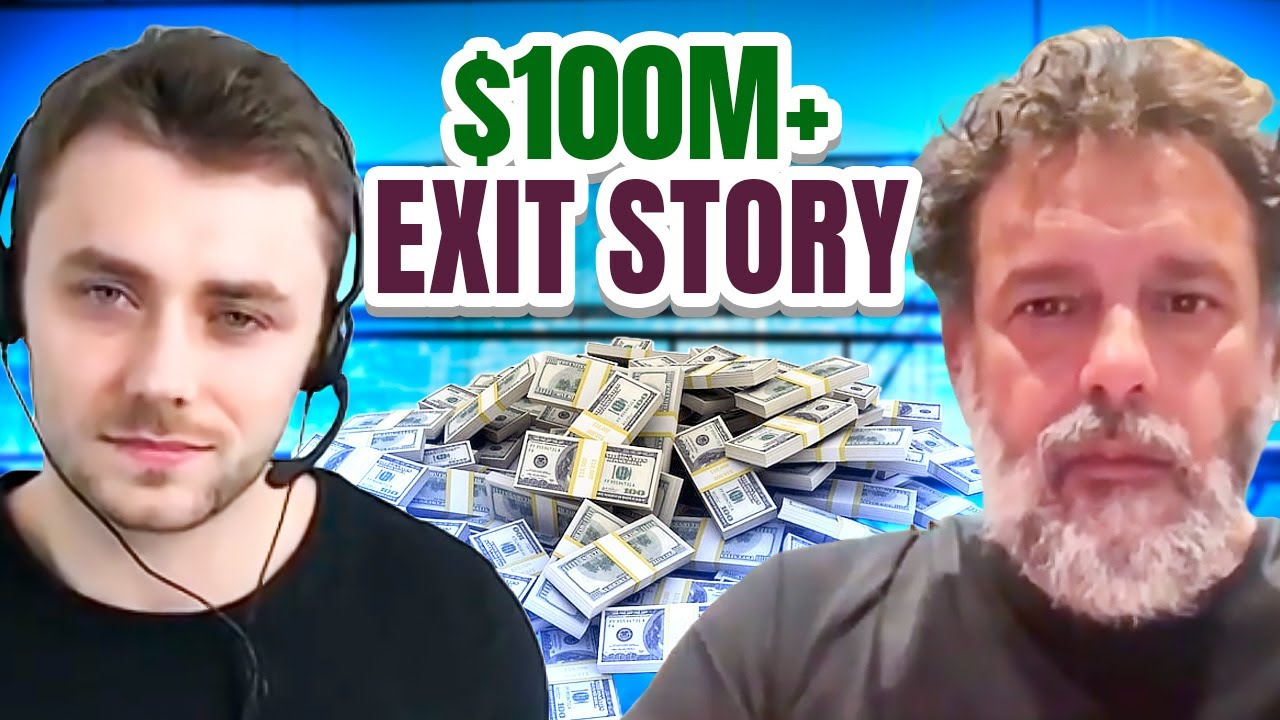
- Alexis Sikorsky argues that bootstrapping forces discipline: New Access never took outside financing, and he warns founders not to raise money before they truly need it, which ‘very often is never’.
- His rule for talking to private equity: never, ever lie about the past, but dream big about the future, because the buyers know the value they bring even if you don’t.
- Sikorsky says firing people was the worst part of 17 years of building. Two rounds of layoffs after the 2008 financial crisis still cost him three days of sleep before and after each one, and it is one reason he is not starting something big again.
- Know who you are, he insists: entrepreneurs are leaders, not managers, and a lifestyle business and a $100M+ exit demand completely different strategies.
- His validation shortcut: ask your clients what they would actually buy. When he asked ten of his banking clients, all of them requested the same 360-degree compliance product, and that became the pivot.
Intro
Watch this part · 0:00Kevin Hi everyone, this was a sick episode. I just talked with Alexis Sikorsky. He sold his company for plus 100 million dollars, and he has built it for around 17 years, with plus 400 employees. It was just a sick session. We talked about personal things, like how it affected him personally, laying off people during the financial crisis, for example, all sorts of other hiccups and issues they faced along the line, but also what he would do as an entrepreneur now if he were 20 years younger, and all sorts of things that he thinks entrepreneurs should focus on more, and other suggestions that would help you and your business to grow. So really, I'm watching it again. I watched part of it, and I still want to extract every nugget out of that session as much as possible. So I hope you like it. Please leave your feedback below, and yeah, enjoy the episode.
How a $100M+ exit affects your life
Watch this part · 1:14Kevin Hi Alexis, thanks for being here. You have exited one of your companies at a plus 100 million dollar exit. So just starting out, how did such a huge exit actually affect your life? And, you know, just put us through that experience a little bit, if you would like to. And what was it from the emotional standpoint, like when you're working towards that big goal, possibly for so many years, and then finally achieving it?
Alexis Hi Kevin, thank you for having me. Of course it changes your life. You have to realize that starting a company is a grind. In my case, the first exit came in 2015, literally came after 15 years of grind, of bringing a company from literally two people in a basement, after our day jobs, to, yeah, 100 million plus exits. And we've been through so many pivots, so many mistakes, so many hard nights. We went through the global financial crisis of 2008. We started at the internet bubble in 2000. So it's been so much grind. We never had any financing. We did all that on our own money and our own time, and literally at some point in 2010, 2011, my house was mortgaged and we had everything in the company, me and my partner. And when you finally get, the exit, actually the first exit, which was smaller obviously, but the first time, when I sold 77 percent of my company, it's a process, right? It started with a phone call, and the phone call doesn't make you feel good, because you get many of these. And then it's a visit from the private equity people, and it's talks, it's negotiation.
Alexis And then you get a letter of intent, and then you start to feel good. You're like, okay, so this thing is actually happening. But then you have five minutes to feel good, then you have six weeks of due diligence, where you really, really, really feel bad. I mention it as six weeks of a rectal exam, right? So basically they go through everything, and then you feel super, super, super bad, because till the letter of intent they've been courting you, so they've been super nice, and then they're not courting you anymore. Now they want to look for reasons not to do the deal. Thank God I had really, really good private equity, and in the process we became kind of friends. So the guy called me and said, listen, you're gonna feel really bad for the next six weeks. Don't. He said, it's the process, don't be scared. You're gonna feel like you're being treated badly, but you're not, actually. So that helped, but still you feel bad. And then you have the final negotiation, and then you have the sign-on meeting.
Alexis And the sign-on meeting is the longest. It's a day, because you have to go through all papers. So at the moment, it's a process, but there is one point in the process where the actual exchange of money happens. So when your lawyer gets out of the room, goes to the printer and prints your bank statement, when you actually see the money in your account, that, for me, was the moment. And it doesn't feel good only about the money. The money feels good, obviously, but it's a huge and tremendous feeling of achievement. Like, actually somebody wired money in your bank account to pay for what you've been building for the past 17 years, in my case. So yeah, and then it does change your life a lot, in a way that, okay, in my case, with that amount, I knew that my kids would always have a roof over their head and their school will be paid. So that's obviously part of the thing. But it also changes your life a lot professionally, because up to that point, and that's something we might talk about later, it's a very important key point, because up until then you never had a boss. You never had anybody giving you orders, or even telling you what to do. And suddenly, in my case, it was the first time of my life I was actually working for somebody. So it does change a lot.
Kevin And the major thing that I'm just wondering is, because a lot of people that had a huge exit, if they don't already have the next thing they're working on, they have to deal with, let's say, mental issues, because there's suddenly a hole in the life or something like that. Was that the case for you? You know, how was it?
Alexis Not at all. Literally, not at all. First of all, it's a progressive thing, right? In my case, at least. There are some cases where you get the check and you leave. It's rarely the case, especially not in private equity, and in my particular flavor of private equity, which is an MBO, you stay on board, like obviously you stay on board. And so, yeah, for two years I was still the CEO, and then we acquired a company that was way bigger than we were. Like in 2017, I think, our company was probably doing 20 million, a little less than 20 million revenue, and we bought a company who was doing north of 25 million. So it is a big M&A. So that took me a lot of time, and I was in charge of that.
Alexis And after that, I really realized that the CEO of this company was much better than I was. Like, the guy had major experience in international companies, bigger, larger groups. And I went to see the PE guys and said, listen, he should be the CEO. We hired him to be the head of sales, but he was definitely CEO material. So then I stepped down as the CEO, became chairman. So for a year I literally, well, best year of my life, I was paid to do nothing, literally. Basically full salary and one meeting per month. And after that, I sold the rest of my shares, and I just wanted to move on with my life. And no, I never had the feeling like, oh, what am I gonna do? You have a little bit of a feeling like, you used to be somebody important, everybody would call you, and suddenly nobody is calling you anymore. So there's a bit of that. But no, I can't say I had any mental health issues. And when I was ready to go back to doing something, I started my advisory business. So no, I never had that.
How it all started, building with babies at home
Watch this part · 8:18Kevin Okay, awesome, super exciting. And how did it all start? You said you have started that company with your partner around the 2000s. What was the main trigger for you to go that step?
Alexis So the year is 1999. I was the owner, the CEO of a computer training company. No, I apologize, strike that. I was an employee of this company, I hadn't bought it back yet. So I was an employee of this company, and I remember, 99, right, it's the beginning of internet becoming a serious thing. Before that, it was just presentation websites. And we had really good guys, and I thought, we should start building internet applications, not more internet websites. So we're talking at the beginning of e-commerce, and we were working with British American Tobacco on data and stuff like that. And so we started this company with a friend of mine who was finishing his PhD of theoretical physics. So we were doing that, he was doing his PhD, and I was teaching during the day, and in the evening we started doing that. So it really started more like a friendly adventure, and we were working every night. So put the kids to bed and working from like 8 p.m. to 2 a.m. And we did that for like a year, and starting to build momentum.
Kevin So you already had kids at that time?
Alexis Yeah, I had kids, but they were babies at the time.
Kevin That sounds rough.
Alexis Well, that's for you, I mean, I'm gonna tell you a story. When you're an entrepreneur, at the end we had like 450 employees, so you have tons of people who come and say, hey, can you see my son? He wants to be an entrepreneur, can you tell him what it is to be an entrepreneur? And stuff like that. So you constantly have kids in their early 20s, or even teenagers, who come and ask you. And I always have this exercise that I do. I always have a copy of Fortune 500. So I get the kid in my office, I give him the Fortune 500 magazine and say, you're going to do something for me. You're going to come back in a week, and in a week you're going to look at all the owners, founders, CEOs of these Fortune 500 companies, and you're going to tell me what they have in common. Have fun. It's a very, very difficult exercise, because they come from all backgrounds, culturally, geographically, in terms of studies. You have people who are already rich, or people who come from nowhere. And usually they come back and say, I have no idea.
Alexis So I can tell you what they have in common, and they all have one thing in common: they work 16 hours per day. It's like, you don't get into that job if you're not ready to work hard. At the end, yes, you have times that you don't have to work that hard, because you have a good team in place. But even at that point, look at the CEOs, and you do work hard. That's the thing. So yeah, I was in my early 30s, I was working two jobs, and I was raising a family, and yeah, it was hard work, no question.
The moments he questioned everything
Watch this part · 12:10Kevin Okay, interesting. Yeah, of course, nothing that's worthwhile comes easy. That's always the thing. And when you, you know, 450 people in a company, that's a lot. I'm pretty sure you had them. What were some of those key moments where you questioned everything, where you said, I'm not sure if I want to continue this?
Alexis All the time. All the time, literally all the time, at least for the first 10 years. There are particular moments that I'll remember for my whole life, and that are literally moments. 2010 maybe, no, 2009, sorry. So our company at the time is a banking software company, so 100 percent of our clients are banks, 100 percent of our clients, sorry, and all private banks, Swiss and international. The company at that point is probably doing, I don't know, 10, 12 million revenues. At that point, there are probably 50, 60 people in the company, give or take. And then, 2008, global financial crisis. So my clients called me and say, oh, by the way, we're not gonna buy anything from you. So the revenue basically goes to zero. Not to zero, because we had maintenance, but we lost 60 percent of the revenue, give or take, like, suddenly.
Alexis And then you have to fire people. Two rounds, first round of 18. Swiss law demands that, if you fire more than 10 people on the same day, you have to give three weeks advance notice. So you send an email that says, within three weeks we're gonna fire more than ten people in this company. So you imagine the feeling in the company. And this particular day, we actually called 18 people in the boardroom and handed them a paper and said, you're fired. So I actually hired a guy whose specialty is to help people find a new job. So we gave them all, I think, two, three months salary, plus that. But still, you see these people in their eyes and shake their hands. And that, by far, is the worst moment of my life.
Alexis And the first time was actually OK, because in a company, you have people that are like, should I really keep them? So the first round was mainly people like that. Second round, I had to fire good people, and really, really good people. And all these people were my friends. They were not just employees. So, yeah, these are moments. Like, when you really want to curl up in a fetal position and die. That's how you feel. But then you have a ton of moments. Every time you lose a client, every time you go to an RFP and it doesn't work, and every time your competitor comes with something half decent, you think, like, ooh, am I really doing that right? And you pivot. Like, you have to pivot all the time. So every pivot is doubt. Does that answer your question?
Kevin Yeah, absolutely. Absolutely. Yeah. I can imagine that that's definitely a rough spot to be.
Alexis But it's part of the journey. It's a tough part of the journey. Like, to that day, and it's probably one of the reasons I'm not starting something big again. It's like, every time I had to fire people, I literally don't sleep three days before and three days after. It's really a bad feeling. It's really the worst feeling.
Kevin Especially if they're good people. Right. Because they didn't, yeah.
Alexis Yes. But in a way, even if they are not good people, that's your problem. It's not theirs, right? You hired them. You made the mistake. So, yeah, it's easier. I usually never had to deal with people who are, like, bad human beings, because hopefully I would notice that. So I didn't have to fire lazy people, or people who didn't want to work. It's rare. I very rarely fire people. I always try to find them a new job or something like that in the company, but it still happens. And yeah, that's the really, really hard part. And you have, like, the moment, how am I going to pay the salary at the end of the month? Like, you have these moments very often.
Kevin Absolutely. So looking back at all these things, of course, on the money perspective, it's definitely, yeah, I think, it was worth it. Please correct me if not. But what would you say, what did it do to, that sounds a little bit mindful now, but what did it do to you as a person? How did it change you?
Alexis What did it do to my soul? That's what you're asking, actually.
Kevin Yeah. Like, you are really empathetic. I hear all this, I feel that, I feel the positive swings. But, you know, especially when you're kind of a good person, or trying to be, it really hurts when you still have to do these things.
Alexis I don't know if you ever met people in your life who are good at one thing. I don't know if you ever met, like, a professional pianist, or a professional musician, or an athlete. It's like they all come with this sense of, there was no other path for me. And that's how I view that. I'm an entrepreneur. There's literally nothing else I can do. And I did a little brain exercise after I left the company, after I had my two, three years of retirement, and said, okay, should I go get a job? And then I said, okay, so what job should I get? And I'm literally good at nothing. I'll never get any kind of C-suite job, because I'm definitely not good enough to be a CFO, even less a CTO. A CEO is the worst job in the world. So I had no choice. That's what I am. I'm an entrepreneur. I started my first company when I was 15. Not the most successful company, but the first company, when I was 15. Exporting, importing stuff. Because I already knew that that's me. I create.
Alexis And that's, by the way, one of the things I talk to people about: know who you are. Are you a leader? Are you a manager? Do you have a vision? Know who you are. It's the most important thing. If you are a manager, if you're really good at managing people and projects, then that's great. But that won't make you an entrepreneur. Entrepreneurs are not managers. They're leaders. They need managers. I wish I knew how many managers I needed at the time. I would have avoided tons of mistakes. But yeah, it's hard. But honestly, it brings so much more joy than pain. So we were focusing on the painful stuff, but I'm 53 years old, and not one day in my life I went to work bored. How many people in life can say that? So I'm fantastically lucky. Like, I'm lucky. And don't make it sound like I'm whining. It's like, not once have I been bored going to the office.
Twenty ideas, one company
Watch this part · 20:21Kevin That's awesome. I'm just wondering, if it wouldn't have been that company, would you have seen a different opportunity at that time? And what do you think about it now? Because usually you have a couple of other things in your mind, and then you settle down for one thing.
Alexis Yeah, I had 20 ideas. I have one regret in my life. I don't have many, because ideas are worth nothing. Everybody has ideas. But I had one idea, and that was earlier than that. It was probably, like, 87, 88. The start of the dot-com thing. And I say, ooh, I should sit in front of my computer and buy tons of dot-com domain names. For instance, my name is Sikorsky. I say, ooh, I have to not forget to do this. I'm going to do Sikorsky.com. And obviously, as I'm a major procrastinator, I didn't do any of these. I'd be a billionaire now. I would probably own, like, I don't know, Sony.com, and Sikorsky.com I would have sold to the helicopter company. So that was an idea I had I didn't do.
Alexis I had tons of ideas that I never did. I also have tons of ideas I did. So that's my first successful company. It's not my first attempt at a company. So that's one advice I give to people. Try. Try and fail. It's okay. It's harder in Switzerland and France than it is in the Anglo-Saxon world, because failure is a bit, like, frowned upon. But it's a mistake. The only way to be sure to not fail is to not try, right? So, yeah, I had a few ideas, and, well, that was not a failure. That was, I needed to leave the country a little bit fast. But I had an internet provider, an internet cafe, in Senegal, before I started New Access. And that was actually a huge success, but didn't end up so well. We got a little bit of a disagreement with the local authorities.
Kevin Okay. Gotcha. Intermission. If I could ask you for one single favor, it would be that you hit subscribe onto this channel, because it helps our channel more than you can imagine. And, you know, the bigger the channel gets, the bigger the guests get. So thank you very much for watching, and let's continue with the episode.
Tips for entrepreneurs in the early stages
Watch this part · 23:12Kevin Gotcha. Yeah. Interesting. So aside from that, let's put that a little bit into more structure. You have tons of things that you probably could tell entrepreneurs, but usually there's always this, you know, certain advice that only works for entrepreneurs at a certain scale, but doesn't work for beginner entrepreneurs, for example. So what would you say to some entrepreneur or founder just starting out, for example, let's say below 200,000 in annual revenue, or 1 million, or something like that?
Alexis Grind. So I have a few advices for this period. First of all, save every penny you can. That's my first mistake. That's the biggest mistake I made. Like, oh, this month I had a good month, let's hire one more guy, even if I don't really need him. Right. And it's the only time I use a biblical reference. At the beginning of the Bible, there is the story of Pharaoh's dreams, of seven fat cows being eaten by seven skinny cows. You know that story, right? And that's, I remember, that bad years will follow good years. So at the beginning, by the way, that's an advice that works from the one guy in his garage to Amazon and Apple: have a war chest, as much as you can. Always. Always know that there will be bad times. There will be mistakes. So at that period, like the pre-one-million-revenue, the pre-profit period, first is grind and save every penny.
Alexis Second piece of advice is, do not rush into financing. I have a bit of a contrarian opinion on that, I'm aware. I get 50 phone calls per week of entrepreneurs saying, oh, OK, so now my company is at that point, I'm making one hundred thousand of revenues, I want to raise a seed. Why? Well, because I'm going to go faster. No, you're not going to go faster. You're going to spend six months trying to raise two hundred thousand that you're not going to get. And if you do get it, then you'll have to give away 30 percent of your company for money you don't need. So go for financing only, and really only, when you need it, which very often is never. A lot of successful companies don't need series F financing. It's like, just get your ass off your chair and go work, go get clients. So that's my second piece of advice. Do not go for financing before you actually really need it, and sometimes never go for financing.
Alexis Third piece of advice would be, know who you are, know where you want to be. There's two types of businesses, right? You have your lifestyle business, and that's a good, like, 50, 70, 80 percent of the businesses. They make a million revenue per year, they make a quarter of a million of profit, and plus you add 100,000 of the owner and his family having their cars, their vacation on the company. And that's a lifestyle business, and it's very, very valuable, and I'm not dismissing it. It's just not what I do. But it's really like, know who you are, because it's a completely different strategy when you get to a million. Usually most of the companies I take on board are a million revenue or more. I don't really specialize in startups. I'm not really good at that. I have a few, but mainly I work with people who are over a million revenue. And now it's the time that you really need to know. It's a totally different strategy. You want to grow a lifestyle business that's going to pay you half a million per year, you're going to live comfortably through the rest of your life, and maybe you're going to give it to your children. That's one strategy. And do you want to go to a hundred million plus exit? That's a completely different strategy. So that would be my first advice around this moment. Know who you are. Are you a leader? Are you a manager? Do you want a hundred million exit, or do you want a lifestyle business? So that's around the time when you need to make this decision.
Alexis And after that, in the million plus, and let's say five million plus, revenue company. Well, even earlier than that, actually. The moment you decided you want a growth business, then you have to think M&A. All my clients, I ask them, I want you to think M&A every day. Every day you go out to say, what can I buy? Because external growth is so much easier and faster than internal growth. So think M&A. Don't be scared of private equity, never be scared of private equity. That's another piece of advice for a little bit later, but get yourself ready. Do your own due diligence on yourself, all the time. Get ready. And when you get to the moment you're ready to talk, there's an advice I use, that I like, I like this sentence: never, ever lie about the past. Even one penny, you don't lie, because they will find it. But nobody's asking you to be realistic about the future. Dream big. Dream big, and tell them you're dreaming big, because they will know. They will know if you believe what you're saying. So that sums it up.
Kevin That's interesting. And I think especially the last part, dreaming big, right? That totally maps that funding path, right, or acquisition path. Because usually, as you said, know who you are. If you want just a lifestyle business, your goal is likely not, you have to scale it up to whatever. And people always do business with people they like and trust. So if you lie about something, it's difficult.
Alexis Yeah. I'm going to tell you, at that point, you decide if you like it or not. I'm going to tell you the story of my exit. How did it happen? Because it plays into the dream big, right?
How the exit went down
Watch this part · 29:25Alexis So I get the phone call in 2015. At that point, we are seven years past the global financial crisis, and we are recovering, we're still recovering. So the company at that time is basically back to the revenue it was doing in 2008. So basically, it was seven years for nothing. I would optimistically say the company was breakeven, that would take some creative accounting, it was roughly around breakeven, let's say. And I get a phone call from a private equity. I get a phone call from a private equity every week, and this one, for some reason, the guys were French, so we are culturally close. They started the private equity after they sold their software business, so they knew what we're doing. So I said, okay, come. And they came, they came from Paris. Come sit with me, spend the day with us. And my initial meeting was very, very, very clear. I said, guys, I'm sorry, I think I wasted your time. The company is not for sale, because now the value of the company is zero. It's still losing a bit of money. It's going to be breakeven by the end of the year. It's already, I remember, it's already breakeven on a month-to-month basis, but we were in June. So I said, the end of the year is going to be breakeven, but the year to date is not breakeven yet. So it's not a good time for me to sell the company.
Alexis They said, okay, I understand. That's totally valid. Let's keep talking, just for the fun. We took our plane, let's keep talking. So we go, we talk, we go into numbers. And at the end of the day, I say, okay, guys, you know what? I like you. Why don't you come back in two years, when my company is profitable? And then we're going to discuss. And they say, no, we're not going to do that, actually. We're going to do something a little bit different. You're going to go home, and we're going to come back in a week. And within a week, you're going to do a business plan. You're going to do a two-year business plan. I don't want a 10-year business plan. I want, you just told me, you're going to do a two-year business plan, and that's what we're going to buy. I said, okay. Took my brother, we went, we did a business plan, which was very optimistic. Like, we were doing breakeven, and we put two and a half million of profit within two years. Very optimistic. They came back in a week, looked at my business plan, and said, okay, I'm going to buy the two and a half million EBITDA that you promised in two years, and I'm going to pay you 85 percent cash and 15 percent earn-out. And I look at my brother and I said, these guys are high, they're crazy. And obviously, we signed.
Alexis Two years later, not only we did our crazy business plan, but we doubled it. And that's the key with private equity. And that's why I say, don't be scared, because these guys know something you don't know. They know you're being a dreamer. They know you're being optimistic. They're not idiots. They know exactly what you have done. But what they know, that you don't, is they know the value they bring. You don't know that. So it's not in your business plan. It's not in your business plan that these guys have run 20 companies like yours. So they know exactly how to optimize. They have a big network of people to sell to. They have good people all around. So they bring so much value. That's why you dream big when you talk to private equity. Because they know something you don't: it's their own value in a deal.
Kevin Okay. Yeah, that absolutely makes sense, right? Because always when you hear founders, on one hand raising money, but also a private equity, it's always about the value exchange, right? And basically the growth that they can contribute to your company as well. Because, you know, when you're working in your company...
Alexis You're becoming blind to certain things. You're a hundred percent blind, and more than that, you are lonely. You are lonely. That's something people have to be aware of. It's a lonely job to be founder and CEO. You have no board. I mean, you can do a fake board, but at the end of the day, if you own the company, the people in your board, they have no power. So you don't, you're not accountable to anybody. All your decisions, you take on a daily basis, alone, decisions that impact the life of hundreds of people, because it impacts the life of all your employees, all your clients. Mainly employees, clients are not that important, but it impacts the life of your employees, and you're alone. And suddenly, you're not alone anymore. And by the way, that's how private equity make their money, right? Because they're all competing for the same company. So the ones that are successful are the ones who can buy cheap their own knowledge and their own value. So yeah, no, absolutely. You're blind and you're alone. And also in my case, but it's the case of most founders, right? You start a company, you started small, and you grow it big. So basically, every day it's a prototype for you. Every day you run the biggest company you ever ran in your life. So, yeah, you really need the help.
Kevin Yeah. Absolutely.
Alexis On April 16th, I'm releasing my book. It's called Cashing Out. It tells my story from the start of the company to the hundred million plus exit. And it develops a methodology and tells you how you can go from your startup, or 1 million company, to a hundred million exit.
What he would build if he started again
Watch this part · 35:41Kevin Going back, you said you don't want to build a big company now again, because you went all through that hassle, and it sounds like you want to focus on life quality now. Please correct me if I'm wrong. But if you would start such a business again, do you have some industries or things, ideas, services, that you are willing to share, that you find interesting enough to evaluate them, if there's a market, or, you know?
Alexis Yeah. There's several. There's several things, actually. Providing you don't need outside money, I love dying markets. Nobody, nobody is interested in SaaS software anymore. Nobody is interested in that. Everybody wants AI, medtech, deep tech, whatever. You have tons of companies in the old sectors that are producing tons of value, that with a little push, a little help, can bring 20 years of value, and that nobody is interested in, because it's not the buzz, right? Like, I don't know, I'm talking to a company that's absolutely fantastic, by the way. Their job is to bring bespoke old banking software in the cloud. That's absolutely brilliant. But you have so much in the old stuff that nobody wants. Like, I was talking to ad companies who write contents for hospitality. They're dead. They're dead, because AI will do that in three years. But they have three good years. Lots of stuff like temporary business, that's like where the AI is not yet, and stuff like that. So that's the ideas I have.
Alexis And there's another idea I have, and I would definitely have done it if I was 15 years younger. There's two stuff I would have done if I was 20 years younger. One is, I don't know if you have any familiarity with the banking universe. It's extremely annoying, but the Americans are putting a huge amount of pressure on all the banks in the world to basically get rid of their American clients. It works. For instance, Switzerland has almost no more American clients in Swiss private banks. Which is okay for uber-wealthy people, but you have tons of expats and the so-called mass affluent, people with decent amounts, who really have trouble banking everywhere in the world, because they have an American passport. And I would start a bank targeting only American clients. Would be fully U.S. compliant, and all the stuff that the banks don't want to do, because they're terrified. So that was one idea, if I was 20 years younger.
Alexis The other idea is, somebody at some point needs to write a proper back office system for banks. Because all banks in the world are running on systems that are 20 years old, or 25, 30 years old. It's ridiculous. It makes no sense. It's like everybody was still driving a Ford T or something like that. It makes no sense. So that's two things I would do. And then, if I had tons of cash, the universe that fascinates me, it's medtech. It's CRISPR. It's gene editing. That's like, if I was smarter, younger, and richer, I would be in that area. But I'm none of these things.
Three things to remember, and pivoting vs chasing shiny objects
Watch this part · 39:41Kevin Awesome. Exciting. Thanks for sharing this, Alexis. I really appreciate it. Maybe as a last question, except you want to share more things: three key takeaways you want people to remember from this session.
Alexis Know who you are. Number one, know who you are. Know where you go. Know where you're going, sorry. Doesn't mean that you have a 10 years plan. I don't believe in 10 years plans. I don't believe a plan over two years has any value. But know the ultimate goal. Do you want to get rich? Do you want to have a lifestyle business? Do you want to be famous? Do you want to do good? Do you want to do social? But know what's your motivator. Know who you are. That's my first takeaway.
Alexis My second takeaway, and I know it sounds contradictory, but it's not: do not fall in love with your plan. Pivot, pivot, pivot. You're going to pivot all the time. So know where you're going, do not fall in love with the plan. And the third one is, get help. It's a lonely business. Get help. Find people who are good where you're not. Find people who have been where you're going. There's tons of us. Even if you don't want to pay an advisor, or you cannot afford an advisor, find a free one. There's tons of us. We're all around. We're on LinkedIn. I never, ever say no to somebody who sends me a message and says, hey, what do you think about that? We do that. There's a reason we're still out there. We love helping young entrepreneurs. Get help.
Kevin Okay, interesting. And sorry, I know I said last question, but you just brought up something really interesting. You said pivot a lot. And there's this fine nuance between shiny object syndrome, like jumping onto new things all the time, and pivoting. How do you differentiate between those two? How do you make sure it's just not the new thing, but the other thing would have worked too, if you put enough effort in it? What's your thought on that?
Alexis Yeah, that's a tricky one. That's what's called experience. And again, talk to people. You know something that's very interesting? You know people you can talk to you never talk to? Talk to your clients. They know. Ask them. People never ask. So, 2006, I was selling for three years now my electronic document management system, and I was getting bored. Honestly, there was nothing to build in this product. It's a pure commodity. It's hard to sell, but when it's sold, it stays forever, because nobody wants to change that. It was not super exciting. So I sat 10 of my clients, not the biggest ones, but the ones that I had the best relationship with. I said, guys, what do you need? What can I build that you would actually buy? And I was expecting 10 different ideas. And they all told me the same thing. It was the time where compliance became big in the banks. And they say, well, we have a big pain. It's like, every time we need to do any kind of compliance on our clients, we need to go to seven different systems and talk to seven different people. Can we have, please, a product where we have a 360-degree view of our clients? Say, okay, we'll do that.
Alexis And, you know, your clients know. So, people don't buy your stuff? Ask them why. Why aren't you buying that? I have a friend who's a fantastic entrepreneur. His name is Daniel Priestley. And he does something, he's the king of the waitlist. So every time he wants to put a new idea out there, he says, we are coming out with that soon, will you be interested? Please join the waitlist. And you ask like five questions. That's it. He knows. If nobody joined the waitlist, it was a bad idea. If 500 people joined the waitlist, it's a good idea. It cost him two hours. Know what I mean? Like, ask. Ask people. Ask your clients. Oh, I'm pissed at you. Yeah, okay, let's sit, and why? What should we be doing differently? What do you need? Why aren't you buying? I have six products, you bought four. Why aren't you buying the other two? You already have it from a competitor. Why? Why are you switching? Talk to people. They know.
Kevin Awesome. Yeah. Thanks, Alexis. I can't tell you how much I learned myself.
Alexis Thank you. That's nice to hear.
Kevin And yeah, thank you for your time. And I hope the audience, I'm pretty sure the audience liked it as well. Okay, please leave your feedback below. And yeah, I hope you liked the episode. I did, for sure. So if you have any feedback for us, please leave it below. And if I could ask you for one single favor, please hit subscribe on this video. It really helps our channel grow. So thank you very much for watching. And don't forget to check out Alexis' new book.
Questions this episode answers
Want this kind of thinking applied to your product?
We build MVPs and act as fractional CTOs for founders who'd rather ship than talk.