
SKD Cabinet Coin
A museum visit becomes a digital keepsake. Live on Base.
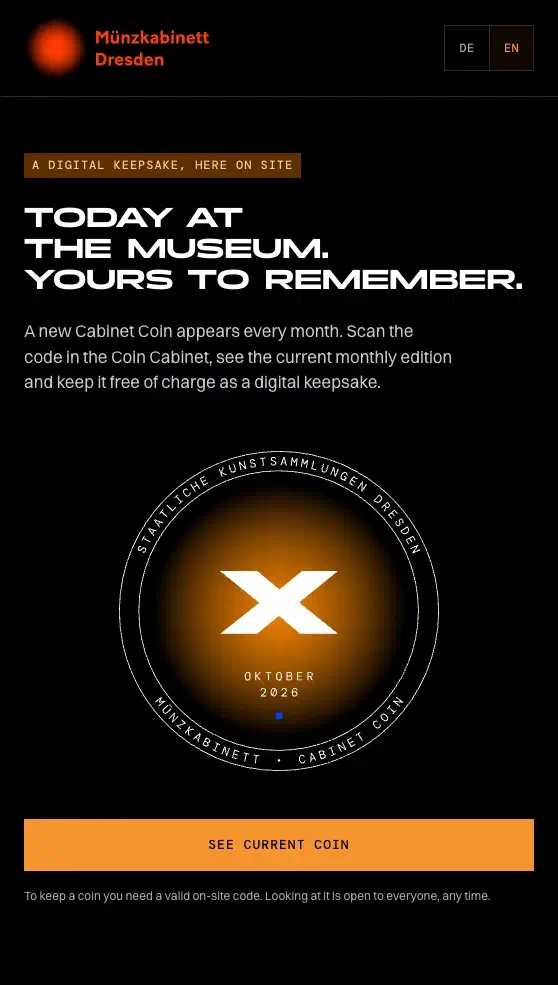
Cabinet Coin is a digital keepsake for visitors to the Münzkabinett of the Staatliche Kunstsammlungen Dresden. Built in collaboration with SKD Digital and JONZN SPACE kollektiv, the application is live and used by museum visitors.
Overview
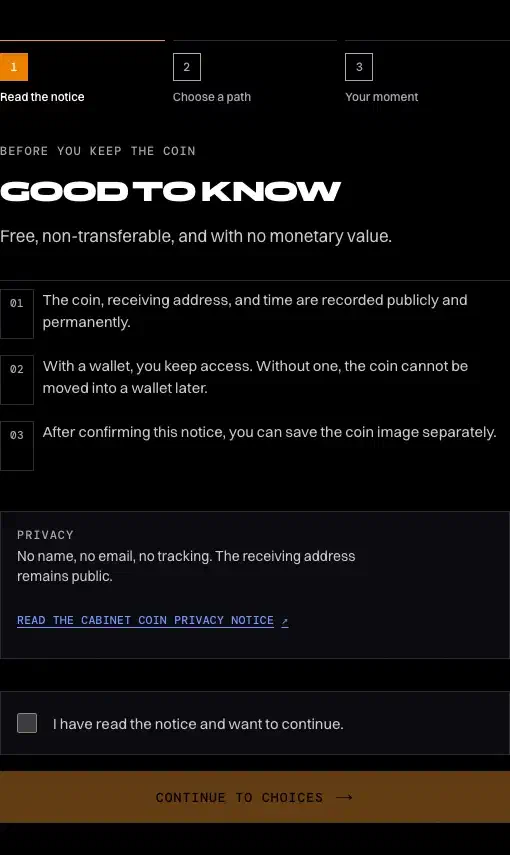
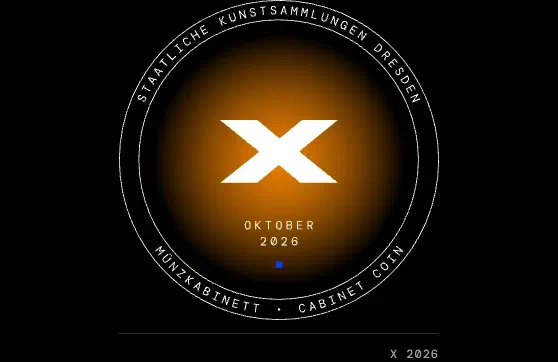
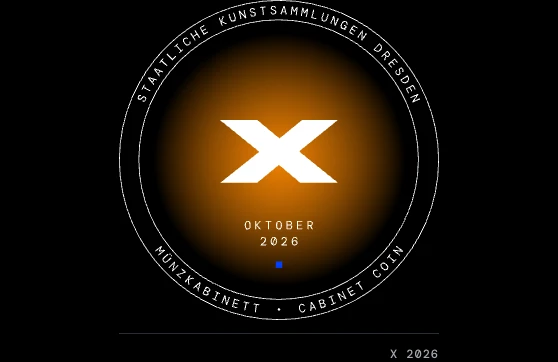
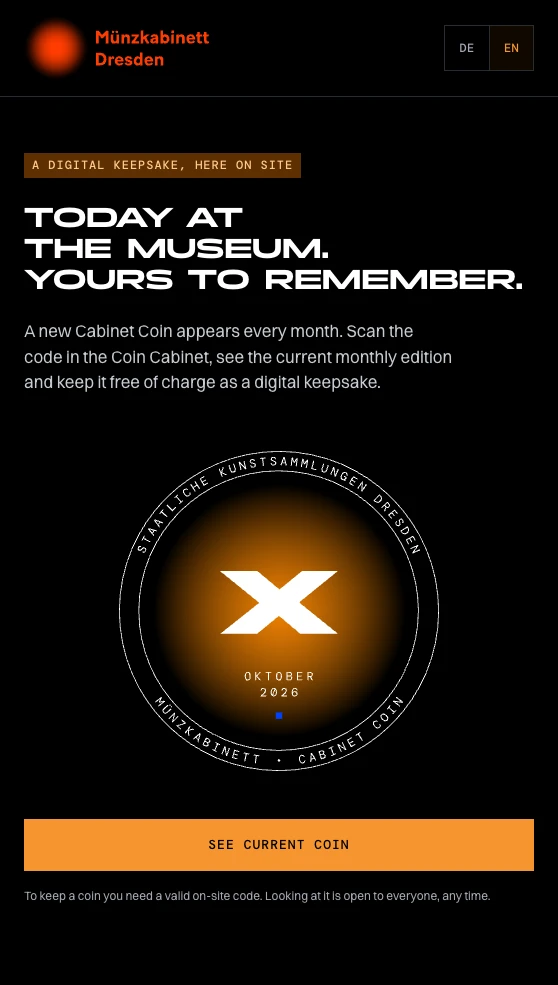
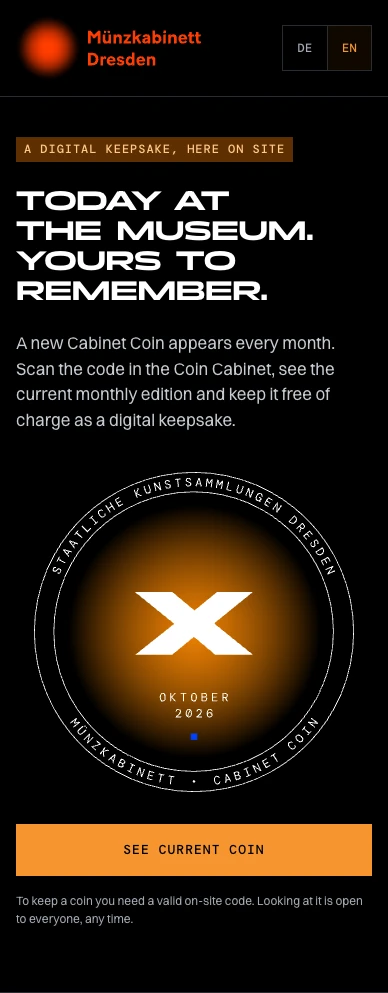
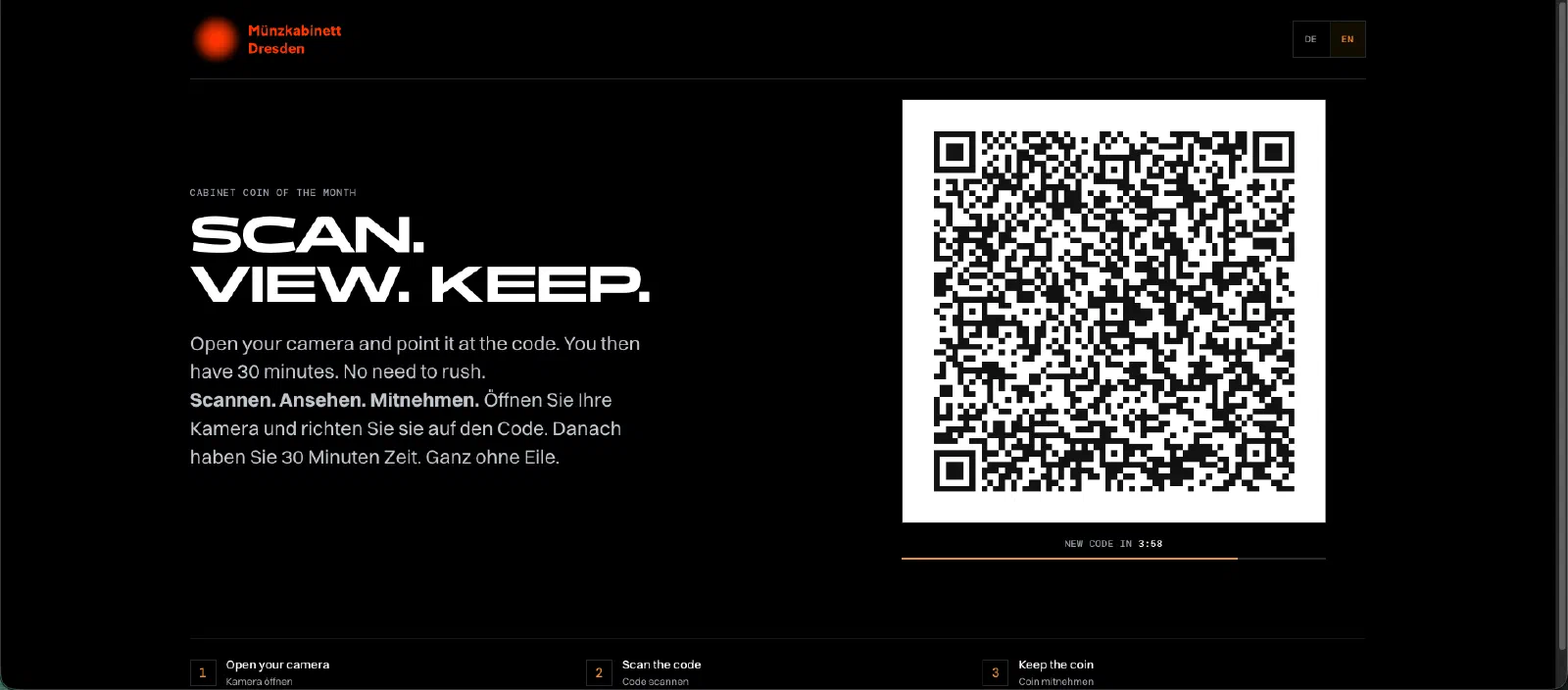
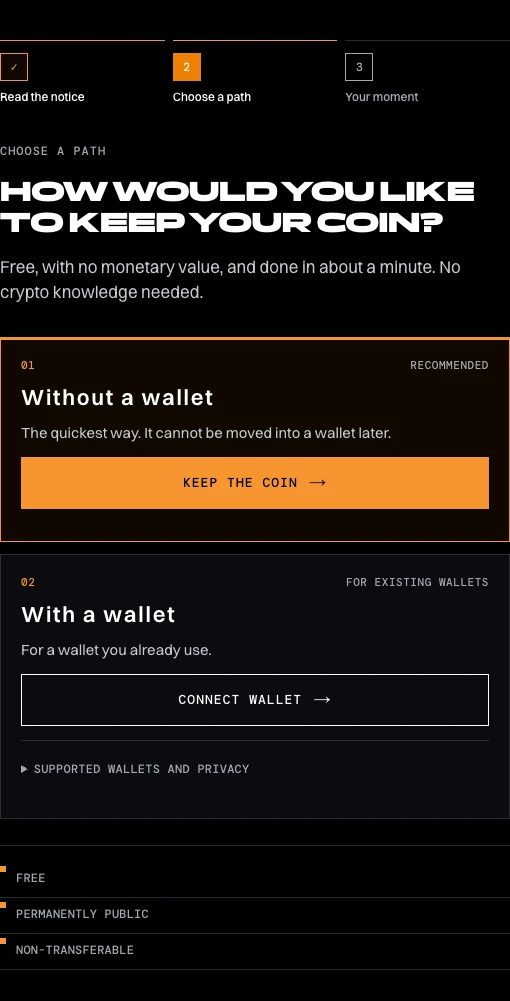
Visitors scan a rotating QR code inside the museum, view the current monthly edition and keep a coin free of charge. A new edition appears each month, with an orange or blue variant assigned at claim time. Anyone can view the current coin online; receiving one requires the on-site code. This 2026 product delivery is a separate engagement from our 2023–2024 Web3 workshops and strategy work for SKD.
What's the challenge?
GDPR and compliance were core delivery challenges: a public museum needed a simple digital souvenir while blockchain records remain permanently public and technically cannot be erased. The project had to make data flows, third-party processing and the consequences of claiming understandable, and minimise visitor data throughout the application. The flow also had to work on a phone without wallet experience, account creation, buying cryptocurrency or paying network fees, while enforcing on-site access, duplicate-claim protection and monthly supply limits.
Make participation possible without creating a user wallet.
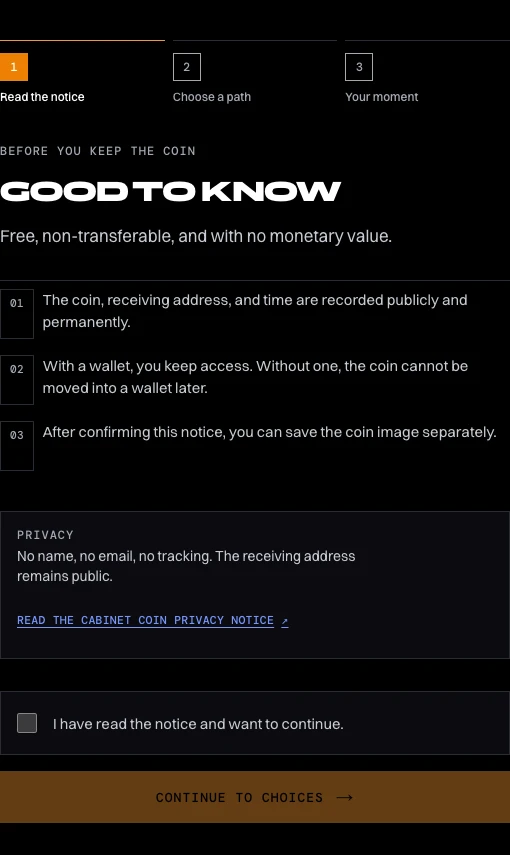
Visitors can use an existing wallet or choose a walletless keepsake. The walletless path records the coin at a deterministic CREATE2 address that nobody can control. It creates no recoverable wallet, private user key or login. Both paths lead to a non-transferable coin; the product makes the limits of the keepsake clear.
What We Did
Wavect built the Next.js application and Solidity contracts, integrating the supplied design and artwork into a German and English visitor flow. Signed on-site QR codes expire after five minutes. Claim authorizations bind the recipient, edition, expiry and nonce; the contract enforces one-time use, a shared supply limit across both colors, duplicate-claim protection per recipient and edition, and a campaign pause. SKD sponsors the transaction fee. Monthly SVG artwork and metadata are generated deterministically, so the next month needs no preparatory contract transaction. The application supports saving the artwork and configurable Wallet passes linked to the public transaction receipt, without a visitor database, SKD accounts or analytics.
GDPR and compliance requirements also shaped the implementation: no visitor database, SKD accounts, analytics or tracking cookies; application-initiated RPC requests pass through a restricted same-origin server endpoint instead of exposing visitor headers and cookies to the upstream provider. Application logs use an allowlist and redact wallet addresses and sensitive request data. German and English visitor disclosures explain third-party processing and the permanent public blockchain record; the project documents record review and approval of the privacy notice by SKD’s data-protection officer.
Outcomes
What We Learned
Privacy requirements and public verifiability must be designed together. Data minimisation in the application does not make a public blockchain record erasable or remove third-party processing. Visitors can view and save the artwork without creating an onchain record; claiming is a separate step with explicit information about those consequences. A saved image or Wallet pass represents the keepsake and does not provide control over its receiving address.
Questions about this project
What is SKD Cabinet Coin?
Cabinet Coin is a digital keepsake for visitors to the Münzkabinett of the Staatliche Kunstsammlungen Dresden. Built in collaboration with SKD Digital and JONZN SPACE kollektiv, the application is live and used by museum visitors.
What was the challenge in the SKD Cabinet Coin project?
GDPR and compliance were core delivery challenges: a public museum needed a simple digital souvenir while blockchain records remain permanently public and technically cannot be erased. The project had to make data flows, third-party processing and the consequences of claiming understandable, and minimise visitor data throughout the application. The flow also had to work on a phone without wallet experience, account creation, buying cryptocurrency or paying network fees, while enforcing on-site access, duplicate-claim protection and monthly supply limits.
What did Wavect do for SKD Cabinet Coin?
Wavect built the Next.js application and Solidity contracts, integrating the supplied design and artwork into a German and English visitor flow. Signed on-site QR codes expire after five minutes. Claim authorizations bind the recipient, edition, expiry and nonce; the contract enforces one-time use, a shared supply limit across both colors, duplicate-claim protection per recipient and edition, and a campaign pause. SKD sponsors the transaction fee. Monthly SVG artwork and metadata are generated deterministically, so the next month needs no preparatory contract transaction. The application supports saving the artwork and configurable Wallet passes linked to the public transaction receipt, without a visitor database, SKD accounts or analytics.
GDPR and compliance requirements also shaped the implementation: no visitor database, SKD accounts, analytics or tracking cookies; application-initiated RPC requests pass through a restricted same-origin server endpoint instead of exposing visitor headers and cookies to the upstream provider. Application logs use an allowlist and redact wallet addresses and sensitive request data. German and English visitor disclosures explain third-party processing and the permanent public blockchain record; the project documents record review and approval of the privacy notice by SKD’s data-protection officer.
What were the outcomes of the SKD Cabinet Coin project?
- Live, Museum visitors are collecting coins
- Base, Public contract and mint records
- Monthly, Orange and blue editions share one supply limit
- Free, SKD covers the transaction fee
How did Wavect work with SKD Cabinet Coin?
Engagement: Fullstack Build & Smart Contracts. Year: 2026.
Which tech stack did Wavect use for SKD Cabinet Coin?
Next.js, Solidity, ERC-1155, Base, Foundry.
What did Wavect learn from the SKD Cabinet Coin project?
Privacy requirements and public verifiability must be designed together. Data minimisation in the application does not make a public blockchain record erasable or remove third-party processing. Visitors can view and save the artwork without creating an onchain record; claiming is a separate step with explicit information about those consequences. A saved image or Wallet pass represents the keepsake and does not provide control over its receiving address.
- Funds Management
- Blockchain
- AI
- Enterprise
Case atlas
Where this case sits
Your current case is marked. Hover or focus to preview another; click to open. On touchscreens, tap once to preview, again to open.
Shared technologies:

Quivr
Quivr was an AI-driven data verification protocol that helped brands identify their most authentic fans. Launched on Polygon, migrated to Solana for compressed …
Day 1 Engagement Start Open case study →Want outcomes like this?
Tell us what you're building. We'll tell you whether we're the right team for it.
Get in touch