
Polity
Unified QA across seven microservices, hundreds of bugs closed, release gates held.
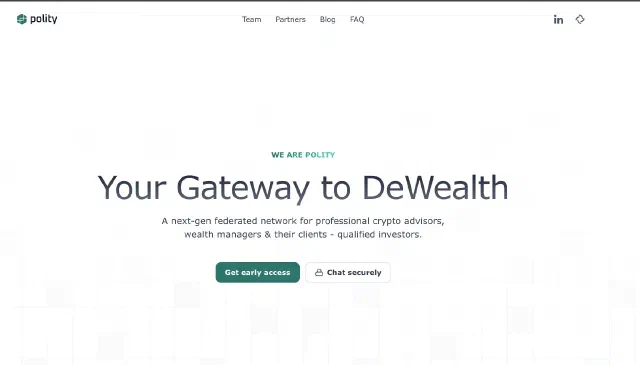
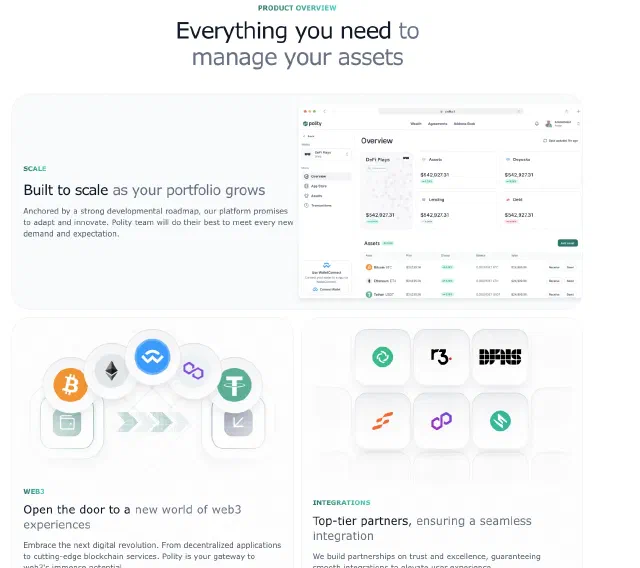
Polity is an enterprise-grade platform running on seven microservices. Distributed, complex, and held to the standards enterprise clients demand, the kind of system where QA is not optional.
“I was particularly impressed by the level of detail and traceability in their analysis.” Alexandre Kotcherguine Clutch
Overview
Polity is an enterprise-grade platform running on seven microservices. Distributed, complex, and held to the standards enterprise clients demand, the kind of system where QA is not optional.
What's the challenge?
Seven services, each with its own tooling, maturity, and failure modes. Multiple vendors shipping code in parallel, features in flight, and an enterprise client base that won’t tolerate regressions. Unify it all into one quality model over 1.5 years, without slowing engineering down.
Centralised QA can't keep up with seven services. We moved quality to where the code lives.
Vendor pull requests were reviewed case by case, testing sat with one central team, and critical flows were validated by hand. That model does not scale to seven services on a continuous-delivery cadence. We rolled out two protocols. The first turned vendor-integration evaluation from case-by-case pull requests into a structured peer-review workflow with explicit gates. The second split centralised testing into service-specific CI gates and component-level validation across all seven microservices. In parallel, we migrated the frontend and tooling stack to a current platform with a modernised developer workflow, replaced manual QA on critical flows with automated end-to-end coverage, and rewired CI across all seven services into guardrailed pipelines with integrated user-flow validation. The point was never more tests. It was pushing ownership, automation, and standardisation down to where decisions are actually made.
What We Did
Quality across seven services and multiple vendors needed a coordination layer before more tooling. The architectural call: move from centralised, manual, fragmented workflows to scalable, ownership-driven, automated systems, optimised for developer velocity, review quality, reliability, and long-term maintainability through standardisation and modern infrastructure. Concretely: rolled out a vendor-integration review protocol, shifting evaluation from case-by-case pull requests into a structured peer-review workflow with explicit gates; rolled out a unified testing protocol, splitting centralised testing into service-specific CI gates and component-level validation across all seven microservices; migrated the frontend and tooling stack to a current frontend platform with a modernised developer workflow; replaced manual QA on critical product validation with automated end-to-end testing; consolidated fragmented legacy CI across 7+ services into guardrailed pipelines with integrated end-to-end user-flow validation. On top of that: E2E strategy, flakiness reduction, CI/CD hardening, vendor and contributor quality supervision, hundreds of bugs triaged. Tooling investments paid back around month three. Result: quality that survives team turnover, vendor rotation, and continuous refactors.
Outcomes
Client Voice
I was particularly impressed by the level of detail and traceability in their analysis.
What We Learned
Quality across distributed systems is a coordination problem, not a tooling one. Holding seven services, multiple vendors, and continuous delivery to one standard took as much process design as it did technical work. The architectural judgment that mattered: move from centralised, manual, and fragmented workflows to scalable, ownership-driven, automated systems.
Questions about this project
What is Polity?
Polity is an enterprise-grade platform running on seven microservices. Distributed, complex, and held to the standards enterprise clients demand, the kind of system where QA is not optional.
What was the challenge in the Polity project?
Seven services, each with its own tooling, maturity, and failure modes. Multiple vendors shipping code in parallel, features in flight, and an enterprise client base that won’t tolerate regressions. Unify it all into one quality model over 1.5 years, without slowing engineering down.
What did Wavect do for Polity?
Quality across seven services and multiple vendors needed a coordination layer before more tooling. The architectural call: move from centralised, manual, fragmented workflows to scalable, ownership-driven, automated systems, optimised for developer velocity, review quality, reliability, and long-term maintainability through standardisation and modern infrastructure. Concretely: rolled out a vendor-integration review protocol, shifting evaluation from case-by-case pull requests into a structured peer-review workflow with explicit gates; rolled out a unified testing protocol, splitting centralised testing into service-specific CI gates and component-level validation across all seven microservices; migrated the frontend and tooling stack to a current frontend platform with a modernised developer workflow; replaced manual QA on critical product validation with automated end-to-end testing; consolidated fragmented legacy CI across 7+ services into guardrailed pipelines with integrated end-to-end user-flow validation. On top of that: E2E strategy, flakiness reduction, CI/CD hardening, vendor and contributor quality supervision, hundreds of bugs triaged. Tooling investments paid back around month three. Result: quality that survives team turnover, vendor rotation, and continuous refactors.
What were the outcomes of the Polity project?
- 7 services, Unified Testing
- Hundreds, Bugs Resolved
How did Wavect work with Polity?
Engagement: Software QA. Engagement size: Multi-year retainer + fixed prices. Year: 2026.
Which tech stack did Wavect use for Polity?
React, Java/Kotlin, Go, Python, Rust, Docker, CI/CD.
What did Wavect learn from the Polity project?
Quality across distributed systems is a coordination problem, not a tooling one. Holding seven services, multiple vendors, and continuous delivery to one standard took as much process design as it did technical work. The architectural judgment that mattered: move from centralised, manual, and fragmented workflows to scalable, ownership-driven, automated systems.
Want outcomes like this?
Tell us what you're building. We'll tell you whether we're the right team for it.
Get in touch