Cedars
Architecture, requirements and code review in one evidence trail.
A documentation foundation and a technical assessment for Cedars’ cybersecurity software.
“They were consistently able to provide me with advanced expert-level responses.” Anonymous, Executive, Cedars International Clutch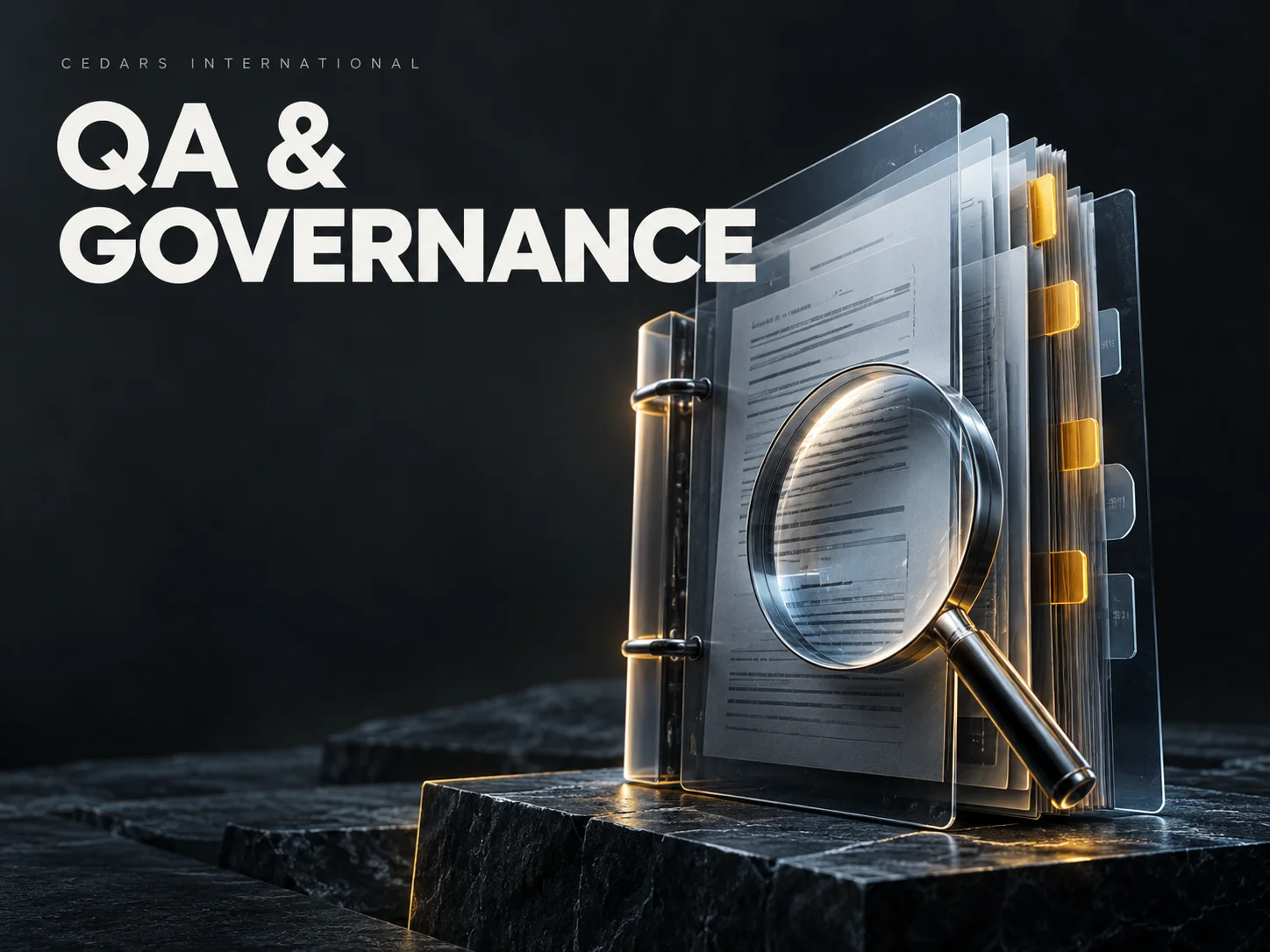
Overview
The Cedars engagement had two phases: documentation and QA, followed by technical assessment. Wavect organized architecture, requirements and governance records, then used targeted source review and controlled checks to prepare prioritized follow-up.
The reviewed environment included a PHP and JavaScript application, Python components using FastAPI and scikit-learn, and MySQL/MariaDB access.
What's the challenge?
Architecture descriptions, requirements, asset records and operating responsibilities answer different questions. To support a product decision, they need consistent definitions and a traceable relationship to the available software evidence.
AI introduces another layer: an application test can establish behavior under specified conditions, while model-quality evaluation needs representative tasks and criteria. Reviewers must keep these forms of evidence distinct and make the scope of each conclusion explicit.
Give a review observation somewhere to go.
A useful finding needs a next step. We linked the documentation and software evidence to priorities, proposed actions and recheck criteria, giving the team a route from assessment to follow-up.
What We Did
We began with documentation structures and drafting guidance: architecture, requirements, technical assets and access, roles, and third-party governance. Cedars supplied the product-specific information. We supported successive reviews and cross-references so the documents could be used together, including the link from a requirement to its verification.
The later assessment examined selected source paths, repository tests and isolated checks using synthetic inputs. For the AI review, we organized the evidence around intended use, information handling, human oversight and evaluation criteria. Each check had a defined scope.
The reporting paired observations with priorities, proposed actions and recheck criteria. That combined software QA with technical discovery, giving the team concrete work to take forward from the assessment.
Outcomes
Client Voice
They were consistently able to provide me with advanced expert-level responses.
What We Learned
Useful assurance connects technical observations with a decision, an owner and a verification criterion. Documentation becomes more valuable when the team can maintain that relationship as the product changes. For another QA engagement in a different setting, see Polity.
Questions about this project
What is Cedars?
Cedars International develops CCDS, a cybersecurity product publicly described in terms of security operations, risk and decision support. Wavect’s engagement combined documentation and QA with subsequent technical assessment. Cedars supplied product knowledge and implementation information; Wavect structured, reviewed and connected the evidence.
What was the challenge in the Cedars project?
Architecture descriptions, requirements, asset records and operating responsibilities answer different questions. To support a product decision, they need consistent definitions and a traceable relationship to the available software evidence.
AI introduces another layer: an application test can establish behavior under specified conditions, while model-quality evaluation needs representative tasks and criteria. Reviewers must keep these forms of evidence distinct and make the scope of each conclusion explicit.
What did Wavect do for Cedars?
We began with documentation structures and drafting guidance: architecture, requirements, technical assets and access, roles, and third-party governance. Cedars supplied the product-specific information. We supported successive reviews and cross-references so the documents could be used together, including the link from a requirement to its verification.
The later assessment examined selected source paths, repository tests and isolated checks using synthetic inputs. For the AI review, we organized the evidence around intended use, information handling, human oversight and evaluation criteria. Each check had a defined scope.
The reporting paired observations with priorities, proposed actions and recheck criteria. That combined software QA with technical discovery, giving the team concrete work to take forward from the assessment.
What were the outcomes of the Cedars project?
- Evidence trail, Architecture, requirements, assets and responsibilities organized for review.
- Targeted checks, Source review and controlled tests informed priorities for follow-up.
- Recheck criteria, Assessment reporting paired proposed actions with subsequent verification.
How did Wavect work with Cedars?
Engagement: QA and technical assessment. Year: 2026.
Which tech stack did Wavect use for Cedars?
PHP, JavaScript, Python, FastAPI, scikit-learn, MySQL, MariaDB.
What did Wavect learn from the Cedars project?
Useful assurance connects technical observations with a decision, an owner and a verification criterion. Documentation becomes more valuable when the team can maintain that relationship as the product changes. For another QA engagement in a different setting, see Polity.
- Funds Management
- Blockchain
- AI
- Enterprise
Case atlas
Where this case sits
Your current case is marked. Hover or focus to preview another; click to open. On touchscreens, tap once to preview, again to open.
Shared technologies:

Polity
Polity is an enterprise-grade platform running on seven microservices. Distributed, complex, and held to the standards enterprise clients demand, the kind of …
7 services Unified Testing Open case study →
Want outcomes like this?
Tell us what you're building. We'll tell you whether we're the right team for it.
Get in touch